Want to Know the Heart of God? Look Where You Least Expect It

Have you ever wanted to know the heart of God? I mean to really, truly know it – deep down where it counts, in the hidden depths of your sizable soul? To know what He thinks, what He feels, what He experiences every day of His life?

I have. And the answer came from the unlikeliest of places.

For the longest time, the picture of Jesus that dominated my thoughts was that of a happy-go-lucky, spirited young man sprinting through the countryside with a smile on His face and a spring in His step. A man beaming with blazing optimism, brimming with boundless joy. A guy on top of the world. Because, after all, He created the world. He owned it. So of course, He lived to enjoy it.

But try as I might, I could not find that Jesus in the New Testament. Nor, for that matter, did He appear in the Old.

In his place, I discovered a very troubled Jesus. Someone who bore the weight of the world on His sagging shoulders. Someone who every day encountered everyday people – people just like you and just like me. People whose challenges seemed overwhelming. People whose difficulties were difficult even for the Son of God to understand.

The deeper I dug into the Scriptures, the more this alternate picture of a melancholy Jesus began to emerge. The Jesus about whom it was written, “He was hated and rejected; his life was filled with sorrow and terrible suffering” (Isaiah 53:3 CEV).

That didn’t sound very happy-go-lucky to me.

“He suffered and endured great pain for us” (Isaiah 53:4 CEV). An intense, unrelenting suffering that He carried not only during His trials and crucifixion, but throughout His life and His ministry as well.

For instance, did you know that Jesus apparently lost His adoptive dad, Joseph, at a relatively young age, and was therefore raised by His single mom, Mary? While this desperate situation doesn’t get a lot of press, we do get a glimpse into Jesus’ household when He stopped dying on the cross just long enough to assign to John the care of His beloved mom. Add to that that Jesus’ brothers all rejected Him. His enemies hounded Him. Even His disciples deserted Him. None of which makes for a spirited young man to my way of thinking.

“He was wounded and crushed because of our sins” (Isaiah 53:5 CEV). Wounded and crushed don’t sound like the attributes of someone sprinting through the countryside to me.

How about a smile on His face with a spring in His step? I don’t think so. Not when I read, “He was painfully abused, but he did not complain. He was silent like a lamb being led to the butcher” (Isaiah 53:7 CEV).

“Who could have imagined what would happen to him?” Isaiah asked, as a thoroughly appropriate, if unsettling, question. 

Who could have imagined the unimaginable? Who would have anticipated the unthinkable? Who should have expected the unexplainable?

There is a reason we read in the Gospels that “Jesus wept.” Yet, nowhere do we read that Jesus laughed. Think about that for a minute. A smile on His face? A spring in His step? Guess again. 

This theme, the seeds of which are planted in the Old Testament, comes into full bloom in the New, with such confessions such as this: “My soul is crushed with grief to the point of death.”

Yes, Jesus admitted that in Matthew 26.

Rather than beam with blazing optimism, Jesus daily discovered the depths of despair that darkened the souls of the people He loved. And this all-pervading sadness clouded His countenance with heart-rending compassion and never-ending concern.

There is a reason that Isaiah made a point to highlight the raw reality that Jesus’ “life was filled with sorrow and terrible suffering.”

Gaze into His eyes and I think we’d see much more dejection than delight. 

All of which means this: Our worst times might be our best times to know, to experience, to feel the heart of God.

Yes, it’s true. There are some lessons, perhaps our most profound lessons, that can only be learned in the classroom of personal pain. 

So much so that you can take this to the bank: Our worst times might indeed be our best times…

Our darkest days might indeed be our brightest opportunities… 

…to truly know, to genuinely experience, to actually feel the heart of God.

Categories: Uncategorized | Tags: , , , , , , , , , , | Leave a comment

“Why Do You Believe That the Bible is True?”

It’s THE question that I get asked more often than any other. And believe me, I get asked all sorts of questions. But in one form or another, I so often get asked some incarnation of the question, “Why do you believe that the Bible is true?”

A perfectly fair question, if you think about it. I mean, the Bible is an ancient book, written from a place and about a place far, far away, and written so long, long ago. It is filled with funny sounding names. Weird stuff (at least what appears weird to us) takes place within its pages. And yet, we are asked to live our lives and to gamble our eternities on the teachings of its ancient texts.

So comes the question: Why do you believe that the Bible is true?

Ironically, I always find it tremendously challenging to answer that question. NOT because of too little information, but because of TMI — too much information. It’s like, Where do I begin? It’s like when you walk into a banquet room and walk up to a beautiful, bountiful table overflowing with rich and widely different delicacies, each of which is designed to make your mouth water. Where do you begin? That is my challenge whenever I am asked the question: Why do you believe that the Bible is true?

Consider this latest PODCAST — our latest in our Jesus in HD series — my humble attempt to answer that question. Just please keep in mind that it is only a small part of a much bigger answer. Just one of the entrees that graces our banquet table. The kind of an answer that stands on fact. Undeniable, irrefutable fact. A compelling and convincing answer. So compelling and convincing that maybe, just maybe you won’t ever doubt the Bible again.

Categories: Uncategorized | Leave a comment

Jesus in the Passover

In this PODCAST, you are about to see Jesus in a way that you have never seen Him before, embedded within the Passover Seder! A celebration observed by our many Jewish friends, a festival that has been taking place every year for more than 3500 years! 

They have done so ever since that defining moment in the book of Exodus when God commanded His chosen people to commemorate their miraculous deliverance from their 400 years of bondage in Egypt.

This podcast will connect so many of the dots that we have talked about these many weeks that we have been together, studying together Jesus in HD. AND your respect for, compassion for, and love for the Jewish people will increase exponentially as you listen.

As we noted several weeks ago, Jesus celebrated this holy day every year of His life. And even during this past week, millions of Jewish people the world over gathered in their homes, with their families and friends, to celebrate this festival of Passover.

In this podcast, we are about to discover in a way that you will never forget that God wove into the very fabric of the ancient Passover story a far larger and greater story of redemption that encompasses every one of our Jewish friends, as well as the entire world, including you and me.

As we do, please keep in mind the overriding significance of Passover as beautifully summed up by Morris Joseph in his book, Judaism as Creed and Life: “Passover has a message for the conscience and heart of all mankind… It is Israel’s, nay God’s, protest against unrighteousness. Wrong, it declares, may triumph for a time. But even though it be perpetrated by the strong against the weak, it will meet with its inevitable retribution at last.”

You can hear this podcast by clicking HERE

Categories: Uncategorized | Leave a comment

So Near, and Yet So Far

We are living in remarkable times.

No kidding. It’s like every single day we are watching the pieces of God’s prophetic puzzle fall one-by-one into place.

Sooner rather than later I think, the puzzle will be complete, the picture will be crystal-clear, and the stuff of prophecy will become the headlines of history.

And we are watching it happen!

Case in point: Just now, Air Force One ever so gently lifted off the tarmac at Israel’s Ben Gurion International Airport near Tel Aviv. The first Presidential visit by Barack Obama to the Holy Land is over. (Interestingly enough, the farewell ceremonies were cut short by a blinding sandstorm. Don’t know if that has any significance.)

Now let me be clear. In and of itself, this particular presidential visit has little if any prophetic significance. History will no doubt record that little of any substance was achieved. Sure, President Obama made his obligatory visits to Jerusalem and Ramallah, where he met with the Prime Minister of Israel and the President of the Palestinian Authority. Talk of peace filled the air: The need for Middle East peace. The priority of peace. The mutual benefits of peace to both parties. The threats to peace from Israel’s unstable neighbors to the North, South, and East (Syria, Egypt, and Iran respectively).

But isn’t it so ironic that even as the words Shalom (Hebrew) / Salam (Arabic) were being bandied about, two qassam rockets launched from Gaza exploded in southern Israel? Listen carefully and you might just hear the faint echo of the Prophet Jeremiah when he quotes God as saying, “All they ever offer to my deeply wounded people are empty hopes for peace… saying, ‘Peace, peace,’ when there is no peace” (Jeremiah 6:14).

Middle East peace: So near, and yet so far.

But here’s the thing: No one, including me, expected anything of substance to result from this heavily-reported (over 100 US journalists accompanied the President to the region) visit. Now that it’s over, the earth will keep spinning, the rockets will keep flying and exploding, and the tensions will keep flaring.

But one day, something of substance will indeed take place.

Consider this: One day, a world leader (most likely coming out of the EU or UN, not the USA) will sit down with the Israelis and Palestinians and achieve the unachievable — a treaty of peace guaranteeing the safety and security of Israel.

The whole world will stand in awe of this historic achievement. The Middle East in particular will heave a huge, collective sigh of relief.

Peace will reign supreme. Or will it?

They say that the devil’s in the details. And that little maxim certainly applies to this scenario. This world leader will pull off the illusion that he truly is a champion of peace. So much so that many in Israel will hail him as their long-awaited Messiah. But don’t be fooled.

If my sense of both prophecy and today’s realities in the region is correct, this pseudo-Messiah will negotiate a breathtaking breakthrough, the broad contours of which will look something like this: A seven-year (Daniel 9:27), two-state solution. (Interestingly enough, just two days ago both President Obama and Prime Minister Netanyahu verbally endorsed a “two state solution” in their joint press conference. “Fully committed” was how Netanyahu put it.)

The State of Palestine will be able to claim Jerusalem as its capital (Revelation 11:2), and in return Israel will finally be allowed to build its 3rd Temple (Daniel 9:27).

That’s not much of a stretch to imagine those few conditions as the basis of a peace accord. It could have happened this week. It didn’t. But one day, it will. And at the very moment that all parties ink that deal, a seven year period of time referred to by the prophets as “the Tribulation” (Matthew 24:29) will begin. We could be that close.

I’ve got to admit, whenever world leaders sit down with Middle Eastern leaders to talk “peace,” my heart beats a wee bit faster, my sense of anticipation grows a tad bit keener, and I cannot help but wonder, “Is today the day?” No, today was not the day. But one day, Yes! It will be the day.

Sadly, this treaty will hold for only 3 1/2 years, at which time the mask will come off. This world leader, man of peace, supposed Messiah will brashly break the very treaty that he himself negotiated. He will enter the Holy of Holies (where only God can dwell), sit upon God’s throne, and proclaim himself the Almighty (Daniel 9:27).

Once his mask comes off, it will be made clear for all to see that this “champion of peace” is in reality that monster to whom the biblical prophets referred as “The Beast” (Revelation 13:1), “the Antichrist” (1 John 2:18), “the man of lawlessness” (2 Thessalonians 2:3), and other equally-disturbing names and titles. Let there be no mistake. He will not be the Holy Spirit-empowered Jesus Christ; he will be the Satan-possessed Antichrist. 

His agenda is clear: to lull Israel into a false state of security, only to betray her by proclaiming himself to be the God of Abraham, Isaac, and Jacob; and to bring the combined military might of the world against God’s people, and against God Himself, in what is commonly called the Battle of Armageddon (Revelation 16:16).

Now that is quite a story; indeed, quite an unbelievable story to some. But who would have believed that today, thousands of years after these prophecies were penned, the whole world would be watching that lovely little land called Israel, yearning for peace, peace when there is no peace?

No, nothing of much significance happened this week. But one day, sooner rather than later, the final pieces of the prophetic puzzle will fall into place, the prophetic picture will be complete, and once all the dust settles, our God will reign, the devil and his many minions will be soundly defeated and finally destroyed, and “all Israel will be saved” (Romans 11:26). Saved not by a false Messiah, but by Jesus Christ, the true Messiah.

Categories: Uncategorized | 2 Comments

The Parable of the Prodigal Son

Welcome to Junior High/Middle School Camp! 

I was in Atlanta last week for training to become a Walk Thru the Bible instructor. So while I was away from my beloved Safe Haven family, I posted this bonus podcast, recorded last summer at Hartland Christian Camp. 

My goal in this message was to paint a portrait for these precious students of just how much God loves them… AND YOU! 

To do so, I chose one of the most beloved of all of the parables that Jesus taught. Care to make a guess? 

I will dare to make this bold prediction: If you listen in to this podcast, you will come away with a whole new and fresh appreciation for what it truly means to be loved unconditionally. 

To be loved by a God who does not love you if… Or love you when… Or love you because… You will hear what it means to be loved by your God who loves you, period. No qualifications. No caveats. No conditions. He just loves you!

Which is exactly what it means to be loved unconditionally. 

As you can probably tell, I am THRILLED that you are joining us for this podcast discussion. You can listen in by clicking HERE.

Categories: Uncategorized | Leave a comment

God Loves You for No Good Reason.

OK, I’ll be the first to admit it. The phrase, “God’s unconditional love,” leaves me a little cold.

Sure, it makes for a wonderful Christian cliché. But it is a mighty difficult concept to wrap our minds around. My mind, anyway.

Yet once we do, it will change our lives. Forever.

I’ll venture to say that we have such difficulty actually believing that God’s love is unconditional – that He does indeed love us for no good reason – because the only love we have ever experienced on a human level is undeniably conditional. That once the “good reason” is gone, the love is gone.

Or to put it another way, I rather suspect that it’s downright difficult, if not impossible, to hear someone say to us, “I love you,” without expecting him or her to qualify it in some way…

I love you when…

I love you if…

I love you because…

I love you unless…

Fact is, I love you when… is not unconditional love.

I love you if… is not unconditional love.

I love you because… is not unconditional love.

I love you unless… is not unconditional love.

To put a more personal point on this discussion, I would dare to ask you this pointed and personal question: Can you think of anyone in your life in whose love you rest absolutely secure with no fear whatsoever that you can or will do anything — anything — that will cause his or her love for you to diminish in any way? 

A love that includes no deal-breakers. A love in which anything and everything is forgivable. A love that fully accepts you just the way you are. A love that makes no demands on you in order for you to continue to be loved. A love that imposes upon you no expectations in order for you to continue to be loved. 

A truly, fully, unqualified unconditional love.

Do you have anyone in your life who loves you that way?

I suppose the safe answer — the clichéd answer — is God. He loves us that way. His love is unconditional.

But even with God, it’s more a matter of my knowing it intellectually, theologically, theoretically, than feeling it and resting in it safely and securely. I cannot escape the thought forever lurking in the deepest darkest recesses of my often-restless mind that even though some in my life profess their unconditional love to me, there must be buried in their sweet sentiment some hidden deal-breaker. That their love is a fragile thing, too easily broken.

Despite their assurances, I cannot help but fear that I could one day potentially do something or say something that will diminish their love for me. That things between us might begin to cool, if not freeze-over completely. That our relationship might never be the same.

Which is to say that I sometimes feel as though I am drowning in a sea of insecurity.

I’ll take it one step further. I’m not sure that as a fallen human being I (or anyone else for that matter) is capable of loving another person unconditionally. Try as I might to love someone that way, the qualifiers “when,” “if,” “because,” and “unless” invariably seem to get in the way.

Not so with God.

He knows no such limitations to His love.

He takes great delight in declaring that “Christ died for us at a time when we were helpless and sinful… But God showed how much he loved us by having Christ die for us, even though we were sinful” (Romans 5:6-8).

“When we were helpless and sinful” are the operative words in that passage. God doesn’t love us when… God doesn’t love us if… God doesn’t love us because… God doesn’t love us unless we clean up our lives or do certain things worthy of His love. He doesn’t love us for any good reason. He loves us for NO good reason.

We need NEVER fear His rejection because God said, “Heart-shattered lives ready for love don’t for a moment escape God’s notice” (Psalm 5:17). We need NEVER fear His refusal because Jesus said, “Come to me, all you who are weary and burdened, and I will give you rest” (Matthew 11:28). We need NEVER fear that His love for us will EVER change — He can never love us any more than He does, and He certainly will never love us any less than He does — because as He said to Israel, so He says to you and to me, “I have never quit loving you and never will. Expect love, love, and more love!” (Jeremiah 31:3).

If you still have any doubts about that, just ask Peter who, in Jesus’ darkest hour, denied Him – “A servant girl came over and said to him, ‘You were one of those with Jesus…’ But Peter denied it in front of everyone. ‘I don’t know what you’re talking about” (Matthew 26:69-70) – and disowned Him – “Peter swore, ‘A curse on me if I’m lying – I don’t know the man!’” (Matthew 26:74). Yet Jesus never, ever denied or disowned Peter, even in and especially in Peter’s darkest hour. 

And He will never, ever deny or disown you.

You will NEVER, EVER hear Him say…

I love you when…

I love you if…

I love you because…

I love you unless…

You’ll only ever hear Him say, I. LOVE. YOU. PERIOD.

Categories: Uncategorized | 1 Comment

Two, Four, Six, Eight — Who Do We Appreciate?

Words have power.

That’s what I love about what I do. I am a painter. But my paints are not oils or watercolors. My paints are words. And words have power.

Case in point: I am about to introduce you to eight words. Eight words which, when grouped together in the following order, contain within them enormous power. The power to save a church. Or, if neglected or ignored, the power to destroy a church.

We’ll get to these eight words in a moment.

But first, the backstory. This past week, I have been in contact with three pastors — more specifically, two former pastors, and one current pastor.

Each of these godly, supremely and supernaturally gifted men was (in two cases) and is (in one case) a God-given gift to the churches they led or lead.

Each is broken. Broken by the trials and tribulations that tragically confront every pastor. Broken to the point where two left pastoral ministry never to return (or so they say today), and one is teetering ever so precariously upon that precipice — admitting even as recently as two days ago his desire to walk away and never to look back.

My heart aches for these men. 

Trust me, I am uniquely positioned in their lives to ache with good cause, because each is a dear and precious friend of mine. Each has opened his heart to me. Each was or is in a church with which I am totally familiar. And each did or does indeed have good reason to relinquish the reins of leadership with feelings of soul-crushing defeat.

The common thread that links these three together? Congregations that include a small but vocal minority who have rejected the principle expressed by eight simple, but oh-so-powerful words.

What are these words? Well, let me put it this way: If I was given a platform from which to address these three churches, I would implore the people in regards to their pastors to do this one thing… Are you ready? Eight words:

“Just love him, and be thankful he’s here.”

For the life of me, I don’t know what gets into people. But I know for a fact, witnessed by my own eyes, heard by my own ears, that there are people — God-loving, Jesus-following people — who, for whatever reason, gripe and complain about their pastors.

“He preaches too long.” “I’m not getting fed.” “His wife walked right past me and didn’t stop to talk.” “He didn’t come to the hospital until the third day I was there.” “He didn’t remember my birthday.” “He’s not the friendliest person I know.” “We really could use someone younger.” “We really could use someone older, with more experience.” “He’s boring.” “He’s not very funny.” “Look at his daughter’s haircut.” “He’s not working hard enough to grow our church.” “He’s too political for the pulpit.” “He never takes a stand on anything political.” “He ______________” “He ______________” “He ______________” (You fill in the blanks.)

(If you could hear me, your ears would have tingled with the breathy sounds of my letting out a prolonged and exasperated sighhhhhhhhhhhhh. Why? Because it’s so not that complicated.)

It is as simple as this: People, please, please, PLEASE…

“Just love him, and be thankful he’s here.”

Most every pastor I know — including these three — are grossly overworked, grotesquely underpaid, stressed out beyond belief, carrying the weight of the world on their shoulders as far as their congregants are concerned, weeping with those who weep, laughing much too little with those who laugh much too rarely, enduring what is for so many pastors the burden of their calling, doing their dead-level best to serve God and the precious people whom He has committed to their care… And doing all of that, and so much more, with so little thanks that it makes me cry just to think about it.

And just like me, and just like you, they so desperately need to feel APPRECIATED.

Yet, even though it takes so little for you and me to express our appreciation — a kind word, a smile, a hug, a note, a $5 gift card for coffee or frozen yogurt, an occasional text message that takes approximately 14 seconds to type and send — pastors are dying out there because of the constant drone of never-ending, nitpicking criticisms.

“Just love him, and be thankful he’s here.”

Well, in two out of the three encounters I had this week, the pastors finally gave up and resigned. As the saying goes, “abuse it, and lose it.” Well, there were those who, through their incessant criticisms, abused their pastors and — surprise, surprise — lost their pastors. And now, these two churches are literally struggling to survive. In both cases, serious thought has been given to closing the doors. All for want of eight simple but powerful words:

“Just love him, and be thankful he’s here.”

The third church is, by all outward appearances, doing just fine, thank you. As is so often the case, the overwhelming majority of people are blissfully unaware of the termites that are slowing but steadily eating away at the foundations of their beloved church. Unaware that these termites weekly take good-sized bites out of their pastor. And that their criticisms are so unnecessary, so petty, yet so deadly.

Look, I’ll happily stipulate the fact that no pastor is perfect. Every single one of them has room for improvement. For crying out loud, the Apostle Paul was up to his hips in alligators who criticized him relentlessly. Yes, it’s true: the celebrated apostle was not good enough for many, if not most, of our churches. And I don’t even need to bring Jesus into this discussion. Good Heavens, the religious establishment killed Him.

So maybe, just maybe, your pastor deserves a break.

“Just love him, and be thankful he’s here.”

When I try to imagine what these three churches would look like today, I want to cry because it would take so very little to change the temperature of each of these congregations. Not to mention the fact that three pastors I know would be thriving in their ministries today. If only the individuals in these three churches would, to a person, embrace just 8 little words.

Eight simple, but oh-so-powerful, words. Words written in reference to the pastors of these three churches. Words that would transform every church if every person in these churches would hear and heed and take these words to heart:

“Just love him, and be thankful he’s here.”

Categories: Uncategorized | Leave a comment

The Clash of the Titans

It was epic in the extreme. I have no doubt that nature held its breath. Every angel in Heaven craned their necks to get a better view. Every demon cheered their hero on, hoping against hope that finally Jesus would be destroyed, once and for all, even before His earthly ministry began.

How did the devil do it? How could he possibly think that he could win? What strategy did he employ in his efforts to topple the King of kings from His throne?

Would it surprise you to learn that he employs the exact same strategy today, against us? He does. Like a prowling lion, the Apostle Peter wrote, the devil is determined to defeat us. 

In this podcast, you will learn how he attempts it, how he sometimes succeeds, and God’s antidote against it. You can hear it by clicking here.

Please note: Though I originally gave this message to my beloved little flock at The Safe Haven, my throat was so sore and my voice quite scratchy. Perfectionist that I am, I decided to toss that recording. What you are going to hear is virtually the same message, though this podcast was actually recorded at last week’s Hartland High School Winter Camp.

Categories: Uncategorized | Leave a comment

I Saw God This Week

2011 HARTLAND HI SCH 1 MONDAY PM-114I saw God this week.

Not in a blinding blaze of His brilliant glory lighting up the night sky. Not in a booming voice that shook my house and rattled my bones. No. He’s much more subtle than that. 

I saw God in a Facebook message. Seriously. A private message sent by someone whose name I did not at first recognize. Someone who lives on the other side of the country. Someone who I’m not sure I have even formally met in person. But God showed up on a day when I desperately needed Him to show up. 

And show up, He did!

A wee bit of the backstory. Last weekend I was speaking at one of my all-time favorite places on this planet — Hartland Christian Camp — to a group of the best high school students you’d ever want to meet. The previous couple of days brought some devastating news to the Hartland staff and me. Our dear friend, Chris — loving husband, beloved father of six, missionary to Africa — died of an as-yet undiagnosed condition that befell him only 3 weeks ago. This came on top of Hartland (and me) losing another precious friend, Ken, to a motorcycle accident just a few short weeks ago. (BTW, Ken was supposed to dean at the Winter Camp at which I was speaking.)

In the language of the Broadway stage, “the show must go on.” So I was alone in my room, on Monday morning, putting my “game face” on. I had no choice. Every one of those students whom I had grown to cherish deserved my best. But before leaving my room and making my way to the chapel, on a whim really, I checked my Facebook page. In a private message, some guy named Kevin wrote to thank me for being one of his instructors at the Word of Life Bible Institute in Schroon Lake, NY, a way back in 1987. He reminded me of something that I said in class that he has never forgotten. A few simple words which had come to mark his ministry to young people even to this day.

As I reflected upon them, I realized that these words, uttered so many years ago, have continued to define who I am and what I am all about.

Kevin wrote, “The motto I still live by in youth ministry to this day is ‘Love kids unconditionally, and always tell them the truth.’” 

“Love kids unconditionally, and always tell them the truth.” 

Which was precisely what I was doing last weekend at Hartland, 26 long years later. 

“Love kids unconditionally, and always tell them the truth.” 

On a side note, you would have been so proud of these students. They have restored my faith in the future generation of Christian leaders. These students sat in session after session, sometimes for up to an hour, listening to this old man drone on and on. They were off-the-chart attentive, taking notes, nodding their affirmations, smiling their encouragements, even when I didn’t have the good sense to sit down and shut up. They are my heroes.

But back on point: “Love kids unconditionally, and always tell them the truth.” 

Come to think of it, that’s an amazing purpose statement not just for youth pastors. That’s a terrific purpose statement for every parent. For every friend. For every one. Words applicable to every one of our relationships, with young and old alike.

So let me broaden it out a bit: “Love people unconditionally, and always tell them the truth.”

Look, I’ll be the first to admit that though that sound bite defines who I am and what I purpose in my heart always to do, I fail and fall short of that goal daily. Sometimes I wonder if in my life those words more accurately define the exception rather than the rule. But before God, they certainly summarize the goal that I constantly strive to achieve: “Love people unconditionally, and always tell them the truth.”

Kevin’s kind words gave me the strength I needed to take my place on the platform and to bare my soul to some pretty special students one more time. Who would have thought? Something as simple as a Facebook message became for me a gift from God. Or more accurately, a glimpse of God. His tender voice reminding me that even at a time of profound personal loss and inexpressible pain, God was right there in the room with me, enduring my pain as if it was His own.

Which challenged me to ask of myself this all-important question: Are the words that I speak or write; are the messages that I send; are the ways that I treat others; are the smiles and hugs that I give or sadly withhold; are they gifts from God, expressions of God, or do they leave people out in the cold, people in need of a divine touch that I failed to give? 

Do you suppose that was what the Apostle Paul was getting at when he wrote this in 2 Corinthians 3:2? “But you are our letter… for everyone to read and understand.” Makes me sort of pause to ponder what kind of a letter I write to the precious people I encounter each and every day.

One of the students asked me this profound question last weekend: “If God does not dwell in the Temple any more, where can people go to see Him today?” What a thrill to be able to answer with these words, also written by Paul: “Don’t you realize that your body is the temple of the Holy Spirit, who lives in you?”

Wow. What a powerful, life-transforming thought. One that ought to give every one of us pause. Pause before we speak, pause before we act, pause before we react.

‘Cuz the truth is, if we really truly did indeed love others unconditionally, so many of the hurtful things we might otherwise say or do we would recognize as unnecessary, and unnecessarily hurtful.

Which comes down to this: If we truly are God’s love-letters to each other, as Kevin was to me on Monday, what kind of a letter are we sending? And will the people who receive our letters be the better, or the worse, for reading them?

Kevin inspired me to shoot for the former. To consistently do what I challenged him to do so many years ago: “Love kids unconditionally, and always tell them the truth.”

Categories: Uncategorized | 1 Comment

If You Love Me So Much, Why Do I Hurt So Bad?

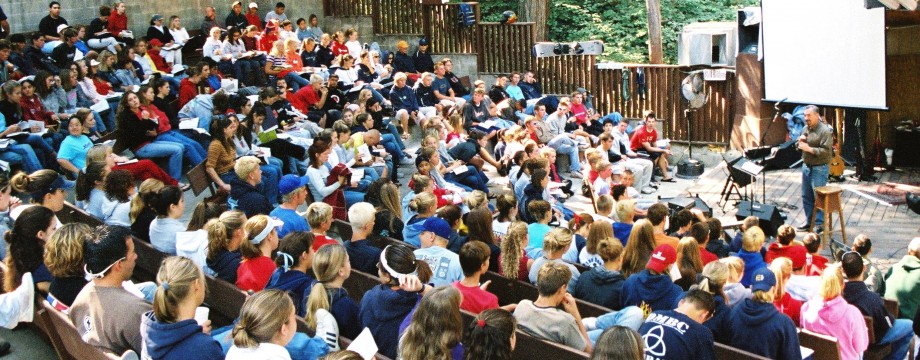
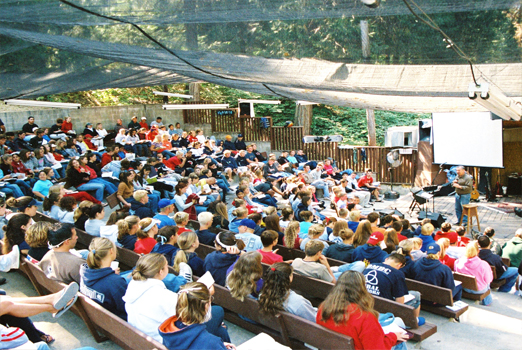
cropped-outdoor-chapel-51.jpg

This is a bonus podcast.

Normally, each week I upload the latest in our Jesus in High Definition podcast series. But this past weekend, I took a break from my beloved little flock at The Safe Haven, where the Jesus in HD podcast is recorded, in order to speak at a High School Winter Camp in CA. Hartland Christian Camp, to be exact. One of my all-time absolute favorite places on this planet.

So in place of a Jesus in HD podcast, I reached back into the archives to a message I gave last summer at a Junior High Summer Camp. A brief word of explanation as to what you will hear…

I usually begin a camp on the opening night by handing out to each student a 3×5 card. I then invite them to write down the one question that they would ask God if given the chance. You might be amazed at the questions they would ask. As you will hear in this podcast, I closed my eyes and randomly selected three of the two hundred or so questions that I received. Those three questions were, sadly, typical of most of the questions that those precious students would ask of God. The three questions were these:

1. Can I get my dog back?

2. Why weren’t You there for me?

3. Why are You so mean? 

So this message that I gave on the Monday evening of that week-long camp is my attempt to answer those questions. 

What would you say to a group of junior higher/middle school students who are basically asking God, Why is my life so painful? Or, to put it another way, If You are so loving, and if You are so powerful, why do You make me hurt so bad?

This is my best attempt at the answer. You can hear it by clicking here.
Categories: Uncategorized | Leave a comment

Blog at WordPress.com.