Author Archives: deweybertolini

Viva Junior Highers!!!

HartlandcampBelieve it or not, the origin of the word “Viva” is Italian!!!

Look it up in a dictionary and this is what you will read: “‘Long live!’ (Used to express acclaim or support for a specified person or thing.)”

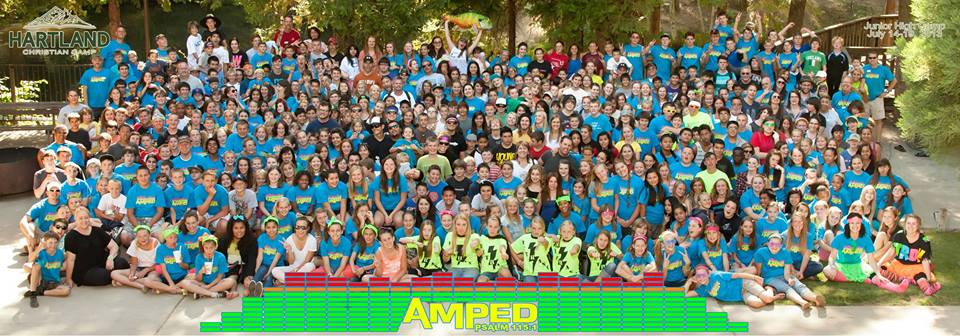
Well, that being the case, I am using it as an expression of acclaim, and support, and a heartfelt wish for a long life to every single Junior High student with whom I spent a fabulous week at one of my favorite places on this planet: Hartland Christian Camp. They blessed me, and would have blessed you, beyond words.

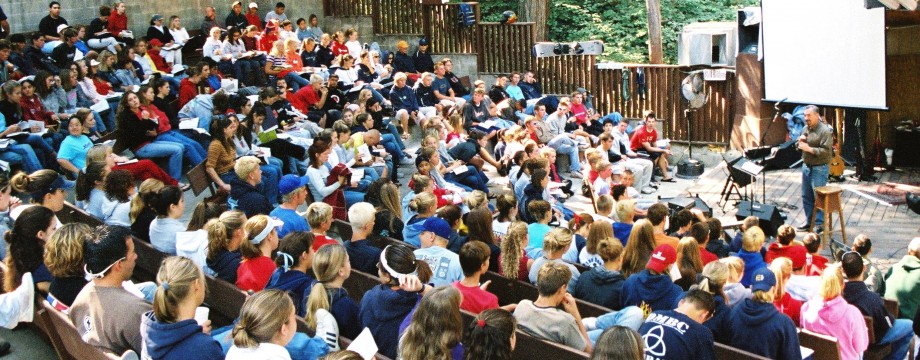
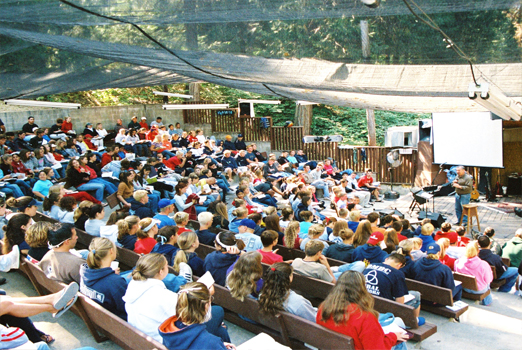
Just imagine the scene: Scores of students lined up early outside of the outdoor chapel, ready to rush in to get the closest seats. Just imagine hundreds of students taking notes, laughing and crying, and interacting with and responding to the Worship (shout out to the Bryan Easter Band) and the Word of God. Just imagine during decision night, dozens of students taking a public stand to tell the world that on Tuesday night they had “decided to follow Jesus.”

I’m telling you, my faith in the next generation, my faith in the future of our country and our world has been restored by the precious gathering of some very special students on top of a modest hill ensconced in the beautiful mountains above Fresno, CA.

So many students were so kind as to thank me for the blessings that they received from me as their speaker. But I’ve got to tell you… They blessed me far more than I could have ever blessed them.

My heart is full, my soul is refreshed, my hope is renewed… all because of some 400 or so students who made my week, my month, my year, and who touched and captured my heart, at a little place called Hartland.

“Thank you” to the dear students, whom I am now thrilled to call my friends, for putting up with me for a week, for lending me your ears, and for giving me your hearts. YOU touched my life in ways that I will NEVER forget.

Viva Junior Highers!!!

Categories: Uncategorized | 2 Comments

I’m Definitely a Fan!

cropped-outdoor-chapel-51.jpgCan I say something here? I LOVE camp. 

Not camping so much. I’m talking summer camp. More specifically, speaking to and loving on some pretty special students at camp.

Yep. I’m definitely a fan!

That’s where I am and what I am doing as you read this. A place near and dear to my heart. Hartland Christian Camp in CA. You can check it out by clicking HERE.

I’m not quite sure what it is about camp that I love so much. Maybe it’s that everyone is (in theory, anyway) unplugged at camp. No Wi-Fi — which means no Facebook, no Twitter, no Spotify, no Tumblr, no Internet! — no TV, no cell service, no technology of any kind. It’s amazing how much easier it is to hear God’s “still, small voice” (1 Kings 19:12) when every other voice clamoring for our attention is turned off and tuned out.

Perhaps it’s the setting. A place of spectacular beauty that leaves no credible doubt that there is a God. I mean, if we do not doubt the existence of Rembrandt as we behold his handiwork, how can any thinking person doubt the existence of God when we behold His handiwork? The blue skies, white puffy clouds, green trees, lush grass, the sounds of the wind rustling the leaves, the starry night glistening like peep holes into Heaven — what a portrait God has painted for us. At camp, we see different things than we see at home. And what we see, we see differently.

Quite possibly it’s because for one blessed week, we are bathed in prayer by the many faithful friends and parents back home who get on their knees on behalf of the camp as a whole, the students individually, the staff, the members of the band, and the speaker. God’s hand is on the place. His blessing permeates, penetrates, and fills the camp like the air. You can feel it — no easy task for a guy like me who is anything but touchy/feely. Yet, feel it, I do. Or more accurately, feel Him, I do.

Of course, it just might be because for six sacred days we become a family and — for all of us this week — Hartland becomes our home. A home where God’s Word is taught, God’s love is shown by every staff member to every student, God’s glory is on display, God’s the Father is pleased, God the Son smiles, God’s Spirit is at work, memories are made, friendships are formed, and lives are genuinely changed. Forever.

Put it all together and guess what? I LOVE camp.

Yep. I’m definitely a fan!

Please, please, please become a part of our prayer team by praying for every single Junior High/Middle School student up at Hartland this week, for the staff, for the band, and yes, for the speaker — that God will be honored, His Word will be held up high, His name will be praised, and every one of us will leave the holy hilltop of Hartland changed. Forever.

Categories: Uncategorized | 1 Comment

“I Will Build an Altar from the Fragments of My Broken Heart.”

Though I have never met him (living, as he did, in medieval times), I can tell you that Rabbi Yehuda HaChasid understood the deepest, and for many of us, the darkest aspect of the human condition.

We’ve all lost someone or something near and dear to us. And given enough time and circumstance, we will lose something or someone yet again.

And when we do, the inevitable result is a heart shattered by our loss.

Some times, probably more times than we’d like to admit, we feel as though our hearts are crushed beyond repair.

Do you know that feeling? Emotions so deep that we cannot turn them into words, only tears?

Loss comes in many different sizes and shapes. The loss of a dream. The loss of a prized possession. The loss of a career. The loss of a beloved pet. The loss of a person oh so precious to us that we cannot bear the thought of living without him or her. The loss of a relationship, especially one where the breakup was not what we wanted. The loss of one’s health. The loss of our idealism. The loss of our innocence. The loss of our faith. The loss of all hope.

Nothing in this world will splinter our hearts more completely than a profoundly personal loss.

And of such a loss, no one is immune.

Last Saturday night at The Safe Haven — which, as the name implies, is a secure refuge for anyone and everyone nursing a broken heart — in a matter of a mere 15 minutes, four dear people shared with me their most recent losses.

And the thing of it is, the way I am wired, I want so desperately to wave a magic wand and fix everything. But I have no wand. I can fix nothing.

What have you lost recently?

How is your heart holding up?

Don’t feel ashamed to admit that you’re not doing especially well with your loss. Trust me, it’s OK to sit amidst the rubble of your once whole heart.

There is a precious promise contained in one short verse buried in the middle of the Old Testament, what Rabbi HaChasid would have called the Hebrew Bible. I don’t know if Psalm 51:17 inspired him to compose such a beautiful sentiment when he wrote, “I will build an altar from the fragments of my broken heart.” But it surely wouldn’t surprise me if it did.

Consider this verse — an invitation and a promise — with me. “The sacrifices of God are a broken spirit. A broken and a contrite heart — these, O God, You will not despise.”

Sacrifices speak of those precious possessions that the people of God voluntarily lay upon an altar as an act of worship — our feeble way of expressing to God our recognition of His infinite worth or value by giving Him something of value to us.

An altar marks the place where we make such a sacrifice, a place where our worship takes place, a place where we meet with God. An altar is where the human touches the divine. Where God Himself touches the earth. Where He meets with us — unseen, unfelt perhaps; but there nevertheless. Assuring us that even in our darkest hours, we are not alone; we are never alone.

When God inspired David to write Psalm 51:17, it was His invitation to gather up all of the splintered pieces of our broken hearts, to then pile them up into a modest, nondescript little altar. It doesn’t have to be fancy. It need not look like much. But its significance cannot be measured. Those are the stones of our hearts — broken, splintered, fragmented, but now fashioned and formed and made into a meeting place with God. 

To meet with us so that we need never to bear the loss alone.

It was most appropriate that God chose David to pen those words. Just think about some of what he lost: a baby to an untimely death, a beloved son to the bitter hatred he felt for his dad, his reputation, his standing with the people, his home in the Holy City of Jerusalem from which he had to flee in fear of his life… 

What have you lost recently?

How is your heart holding up?

Rabbi HaChasid said it so beautifully: “I will build an altar from the fragments of my broken heart.”

In response to his words I would humbly suggest, “Poor is the person who has never suffered a loss.”

Poor because Psalm 51:17 makes crystal clear that there is a richness — a closeness, an intimacy, a depth — to our relationship with God that we cannot know in any other way but through profound and personal loss.

What have you lost recently?

How is your heart holding up?

Perhaps it’s time to build an altar.

Categories: Uncategorized | 9 Comments

When “Christians” Won’t Let Us Forget…

I learned something last week, ironically enough from the unlikeliest of sources.

His name was Levi. I say “was” for two compelling reasons: 1. Levi is no longer with us, having graduated to Heaven a long, long time ago. 2. Levi changed his name to Matthew, and that for one very good reason.

Levi, whose name means “attached,” attached himself not to the God of his people — the God of Abraham, Isaac, Jacob, and his dear and loving parents who conferred upon him that name. He instead attached himself to Rome, as one of their long arms to collect Herod Antipas’ exorbitant taxes from his own people, the occupied and oppressed Jews of Jesus’ day.

From a Jewish standpoint, nothing could be worse. Levi betrayed his own people, overtaxed them in order to pocket the profits, and turned their collected taxes over to the Roman government to fund everything from lavish palaces to crucifixions — potentially of his own neighbors, friends, and even family.

Levi was the New Testament equivalent of a Jew selling his soul to Hitler as a Nazi collaborator.

But when he met Jesus, everything changed. And to punctuate that point of change, Levi even changed his name to correspond to the new life and new start that he received from Jesus. He changed his name to Matthew, which means a “gift from God.” Which was exactly what his new life truly was.

But here’s the problem… the most religious of the people would not let Matthew forget his past, forget what he was. Ever. Even to the point of chiding Jesus’ disciples who dared to dine with Matthew, “Why do you eat and drink with such scum?”

Yes, they said that. They said that AFTER Matthew left his tax office forever. AFTER Matthew changed his life from despised tax collector to committed Christ follower. AFTER Matthew even changed his name to commemorate his changed life. 

In their self-righteous, judgmental minds, he would ever and always be “Levi, the tax collector.”

You can hear Levi’s entire story in all of its dramatic detail by clicking HERE.

But here’s what I learned. This is what Levi-turned-Matthew taught me. A couple of things really.

1. There are some religious people even today (and yes, I’m talking some “Christians” here) who will never forget what we once were. And they will make doggone sure that no one else around us ever forgets. They are quick to remind anyone and everyone that we are flawed, as if they are not.

They may not be as overt as the religious leaders in Levi’s story were. It may not be with harsh-sounding words spewed with obvious scorn. But when our names come up in their hearing, it could be a raised eyebrow, a tone of voice, a slight recoil, a subtle warning that they assure their listeners is given with such sadness that they even need to say something that they surely do not mean to be negative, but is indeed negative.

You know what I’m talking about, don’t you. Odds are overwhelming that you, like me, have been on the receiving end of such judgments. More than likely more than once.

“Christians” who will NEVER let us forget, nor let anyone else forget, what we were or what we’ve done, or what they’ve heard about what we were or what we’ve done. No matter that like Levi, we have changed. No matter that like Matthew, we are different now. No matter that like Matthew, we have received a glorious “gift from God” — a new life, a new start, a new beginning.

To “them” we will always be Levi. They will never see us, nor respond to us, as Matthew.

2. It just doesn’t matter. It really doesn’t matter what the self-righteous think about us. If they somehow make themselves feel any better by elevating themselves above us — which is exactly what judging, gossiping, snubbing, or shunning us is — so be it.

I’ve lived long enough now (to at least begin) to not care what other people say, and really only care about what God says about me. I know, I know, it’s a whole lot easier to write that than to live that. But I’m trying… (I invite you to try it with me. Together, we can do this!)

So in light of Levi-turned-Matthew’s story, I can’t help but to ask you: Do you know any religious people — “Christians” today who think they are righteous, as evidenced by their judging those whom they think are not as righteous as they?

If so, have you personally felt the sting of their judgments? Do you still bear the scars — mentally, emotionally, spiritually — of their criticisms and gossip, their shunning you or scorn?

Here’s the thing: Despite their judgments, their harsh criticisms, their malicious gossip, I’ll tell you what: I’d much rather sit among the judged than stand among the judgers. Wouldn’t you?

I’d much rather be scorned, than be a scorner. Wouldn’t you?

I’d much rather be gossiped about, than be guilty of spreading malicious gossip. Wouldn’t you?

I’d much rather be shunned, than be a shunner. Wouldn’t you?

It was Jesus who said, and Matthew who recorded Jesus saying it, “God will bless you when people insult you, mistreat you, and tell all kinds of evil lies about you because you are my followers. Rejoice and be exceedingly glad, for great is your reward in heaven, for so they persecuted the prophets who were before you.”

Can you just imagine the hope and encouragement Levi-turned-Matthew received as he both heard that statement, and wrote it down? Wrote it down for himself? AND wrote it down for us?

Categories: Uncategorized | 20 Comments

THIS Should Make Your Day. (It Sure Made Mine!)

I almost broke out laughing, the other night at The Safe Haven. I mean, right in the middle of my message.

As a part of my weekly sermon preparation, I pray diligently for God to touch the hearts of the precious people who are a part of the Safe Haven family — literally (as in those who attend) and virtually (as in those who listen to the podcast). 

But last Saturday night, it was almost as if I was sitting in one of the comfy padded chairs listening to someone else speak. It was my voice alright, but it was like I was a listener rather than the speaker. Weird. But the thing of it was this: My voice was saying EXACTLY what I needed to hear. (I don’t know why I find that to be ironically bemusing, but I do.)

Boiling it all down to one succinct and simple soundbite, what I “heard” that night was this: God forgives sins.

Or more to the point (if you’ll permit a little self-indulgent narcissism here): God forgives MY sins. ALL of my sins.

Now, I know that you already know that. But before you write that off as another nice-sounding “tell me something I don’t already know” kind of pious platitude, just think about that for just a moment longer. God forgives sins. Or to put it another way, you and I are forgiven. We are forgiven of everything. Everything. 

Don’t take my word for that. Take God’s Word for that:

“You are a God of forgiveness, gracious and merciful, slow to become angry, and rich in unfailing love” (Nehemiah 9:17).

Psalm 32:1-2, “Our God, you bless everyone whose sins you forgive and wipe away. You bless them by saying, ‘You told me your sins, without trying to hide them, and now I forgive you.'”

“If you kept record of our sins, no one could last long. But you forgive us, and so we will worship you” (Psalm 130:3-4).

Daniel 9:9, “But the Lord our God is merciful and forgiving, even though we have rebelled against him.”

Micah 7:18, “Our God, no one is like you… You freely forgive our sin and guilt.”

And then this, my favorite! God Himself says, “I — yes, I alone — will blot out your sins for my own sake and will never think of them again” (Isaiah 43:25).

Trouble is, God will never think of our sins again, but so many of our “friends” surely do — non-Christian and Christian alike. It’s almost as if they love to remind us that they do still think of them: with furrowed brows when look at us; or patronizing tones in their voices when they speak to us; or the gossip that they spread to others about us; or the unkind things they say about us. Reminding anyone and everyone — lest they forget and give us a pass for our past indiscretions– that we are flawed.

Which shouldn’t surprise us in the least, given the fact that one of the names of Satan is “the accuser of our brothers and sisters” (Revelation 12:10). He NEVER lets us forget. And he delights in using those around us, often even those closest to us, to rub our noses in our past failures.

But the devil and his unwitting minions notwithstanding (because it really doesn’t matter what he or they say to us, or about us), God says — HEAR IT NOW — the three most beautiful words in the English language: I FORGIVE YOU!!!

Meaning this: We are forgiven! We don’t need to wallow around in the pigpens of our past filth. We don’t need to be spiritually paralyzed any longer by the shameful memories of things we have done. We no longer need to carry around on our sagging shoulders the dead-weight of our guilt. We no longer need to feel ashamed of our past poor choices. 

We are now free. Free from all of that.

We are now free to do exactly what the Apostle Paul did: “My friends, I don’t feel that I have already arrived. But I forget what is behind, and I struggle for what is ahead. I run toward the goal, so that I can win the prize of being called to heaven. This is the prize that God offers because of what Christ Jesus has done” (Philippians 3:13-14).

And just what is it that “Christ Jesus has done” for us? Say it with me: Forgiven us. Forgiven us of everything.

So let those around us — non-Christian as well as Christian — say whatever they want about us. They can gossip about us to their hearts’ content. They can ever-so-subtly frown whenever our names are mentioned in their hearing. They can look so sorrowful as they feel the need to spread whatever hurtful things they so desire. They can paint however an unflattering picture of us they care to draw. Their opinions don’t matter. Their words mean nothing. Only God’s Word means anything. And what does God’s Word say about you and me? Hear it for yourself:

“What shall we say about such wonderful things as these? If God is for us, who can ever be against us?… Who dares accuse us whom God has chosen for his own? No one—for God himself has given us right standing with himself. Who then will condemn us? No one — for Christ Jesus died for us and was raised to life for us, and he is sitting in the place of honor at God’s right hand, pleading for us. Can anything ever separate us from Christ’s love? Does it mean he no longer loves us if we have trouble or calamity, or are persecuted, or hungry, or destitute, or in danger, or threatened with death? No, despite all these things, overwhelming victory is ours through Christ, who loved us” (Romans 8:31,33-35,37).

Or to put it much more simply than all of that: “We are forgiven!”

Categories: Uncategorized | 1 Comment

A (Grand)Father’s Love

My Precious Little Nora

My Precious Little Nora

Less is more, so the saying goes. 

So in honor of this time-tested truism, I’ll make this short and sweet.

I love my granddaughters — all three of them. My life has never been the same since Callie, Nora, and Maggie entered this world. I love them in ways that they cannot even begin to understand at their very young ages.


So it was that I was doting on little Nora this past week when I had an epiphany:

We are created in God’s image, yes? That being the case, there is absolutely no doubt in my mind that when God looks down on me, He feels the exact same emotions, feelings, inner glow, unconditional commitment, unqualified love — whatever you want to call it — for me that I feel for, in this case, little Nora.

And just as neither Callie, Nora, or Maggie can even begin to understand this (grand)father’s love for them, so you and I cannot even begin to understand God’s love for us.

But understand it or not, it is there. It is real. It is undeniable. It is unbreakable.

There isn’t much in this troubled world of ours that you and I can count on. But one thing’s for sure: My three granddaughters can count on my love for them — a love that will last forever. A love that will last forever No.Matter.What!

And in the exact same way, you and I can count on God’s matchless love for us. A love that will last forever. A love that will last forever No.Matter.What!

Categories: Uncategorized | 4 Comments

When Illness Strikes: Developing a Doctrine of Disease

I cannot think of a more personal topic of discussion. One that hits every single one of us right where we live.

Because the undeniable fact is this: Every one of us gets sick. Every one of us has friends or loved ones who get sick.

There isn’t a person reading this blog post who hasn’t prayed for someone who was/is sick. We have begged God for healing. We have pleaded with Him to have mercy on ourselves or on others whose bodies are debilitated by some disease.

Sometimes God answers yes. Other times, it’s as if He doesn’t hear us at all.

What should we make of this? What do we believe about disease and healing? What should be our attitude when we, or someone whom we love, gets sick? How should we pray for them, or for ourselves, when illness strikes?

It’s time for us to have this Most.Important.Discussion, courtesy of a truly remarkable individual who himself was horrifically sick. His attitude, his example, and his prayer have much to teach us.

Meet him by clicking HERE in yet another Jesus in High Definition podcast.

Please note that depending upon your web browser, it may take up to 60 seconds for the podcast to play.

Thank you for listening. Thank you for engaging in this discussion. Please feel free to leave your comments!

Categories: Uncategorized | Leave a comment

“Don’t Just Do Something…

…Stand there.”

What a profound piece of sage advice.

In the interests of full disclosure, I did not come up with that on my own. It came to me this morning courtesy of my virtual friend, Rabbi David Wolpe. I say “virtual” because though I have never met him personally, I admire him from afar. So much so that I listen regularly to his podcast.

And as I listened to one of his podcasts this morning, I had an epiphany.

He was relating to his congregation at the Sinai Temple in Los Angeles that he recently returned from a trip to Israel on which he was accompanied by over 400 Jews from the LA area. When they arrived in Jerusalem, his group was wisely told, “While you are here in Jerusalem, don’t just do something. Stand there.”

Meaning this: Resist the natural urge to visit as many places as you can squeeze into every moment of every day while you’re here. Do not become overly preoccupied with shopping, taking in as many of the religious/historical sites as you can, snapping as many pictures as is possible, and on, and on it goes. Just stand there, and allow the miracle of the moment to work its wonder in your life. Take into your soul the well-worn stones upon which you are standing. Absorb the meaning of these stones to your ancestors, and soak into your mind and heart what these stones mean to you. And most importantly, what these stones mean to God.

Stones where God chose to touch the earth.

Now I am happy to report that in my fifteen previous trips to Israel — and I fully anticipate the same will be said of my 16th next March — I have been oh-so-careful, obsessively so, to do just that. To “Don’t just do something; stand there.”

I have my ritual, from which I rarely depart. On my first night in Jerusalem, I walk down to the Western (Wailing) Wall. I look upon its stones. I gaze into the eyes of the scores of people gathered there. I contemplate their often wrinkled faces, gnarled hands, and tear-drenched eyes. Their emotions become my own emotions. Their prayers for the peace of Jerusalem and the coming of Messiah become my prayers.

In short, I stand there.

I stand there and contemplate all that has happened there throughout the thousands of years since Abraham first led his son Isaac up to the top of Mount Moriah, now enclosed by that wall, forming the western boundary of what is called today the Temple Mount.

On my second night, to the Church of the Holy Sepulchre I go, built over the actual place where Jesus was crucified, buried, and rose from the dead. I cannot even begin to put into words the sensations I feel when I enter that church, gaze upon that hill contained within its enormous environs, and just stand there.

Night three usually takes me to Ben Yehuda Street in downtown Jerusalem. I walk the cobblestone street from top to bottom (Ben Yehuda Street is a kind of walking mall), find an out-of-the-way table, and rather than “stand there,” I sit there. I sit there to watch and listen. Usually a younger crowd fills the street, bringing with it their music, energy, and excitement. I wonder what their lives are like, what challenges they face, what heartaches they carry, what electrifies their lives. And then I pray for God’s grace and peace to flood their lives.

There is so much to be said about “Don’t just do something;  stand (sit) there.”

On the fourth night, I try (usually successfully) to visit the home of a local family — perfect strangers who take a huge risk when they open their apartment and their hearts to someone like me. I’ll tell you what… By the end of the evening, we are no longer strangers. A bond has been built. I have taken them into my heart. I hope that they have taken me into theirs. The reason for this? The entire time that I am a guest in their home, I don’t just do something; I stand (sit) there.

I am so wealthy for having had those experiences. Not in a monetary way. Something far more valuable. A richness of my soul.

But here’s the epiphany that I had this morning: I don’t have to go Israel to heed such wise words. I can heed them here.

Ironically, that was the theme of my PODCAST last week at The Safe Haven. We noted then how Jesus took time out from just doing something in order to stand there. To be alone. To contemplate. To meditate. To pray. And how often He chose to “don’t just do something; stand there.” How ironic that though that was the focus of my own message, yet I didn’t exactly connect the dots to my own life and experiences until the good rabbi gave me a slightly different perspective. Thank you, Rabbi Wolpe!

So no, I don’t have to be in the Holy Land to heed the wise words of “my” rabbi. And neither do you. 

We can choose right here and right now to “don’t just do something; stand there.” Why? Because God’s presence is as much here as it is over there. God’s glory is reflected in His bountiful and beautiful creation as much here as it is over there. God can hear my prayers as easily here as He can over there.

And what’s true for me is equally true for you.

I think that God was onto something when He inspired the pen of the psalmist to write, “Be still, and know that I am God” (Psalm 46:10). 

Or to put it another way, if you think about it, Psalm 46:10 was God’s way to essentially say, “Don’t just do something; stand there.”

Categories: Uncategorized | Leave a comment

A Pastor’s Highest Calling

67959_10151334109778447_380269708_nSPOILER ALERT: Dave, if you are reading this, STOP!!! (You’re not allowed to read this until after Sunday.)  😉

This coming Sunday morning, my son, Dave, will be ordained as a pastor. I have been invited to bring to him the charge, or the challenge — an unspeakable honor and privilege.

If you had five minutes to offer one challenge to your soon-to-be senior pastor son — not so much a father-to-son chat, as a pastor-to-pastor discussion, what would you say?

THIS is what I will say. A challenge that goes far beyond pastors. A challenge that is most appropriate for EVERY.ONE.OF.US.

Dave, I cannot begin to tell you how proud your mother and I are of you. We are thrilled for you as you embark upon this new chapter of your ongoing journey. And the thought that Pastor Guy would allow me the privilege of bringing to you a brief charge, or challenge, is beyond words. Thank you, Pastor Guy, for this opportunity.

The Apostle Paul was a father-type-figure to two younger pastors by the names of Timothy and Titus. 

He had so much to tell them, that it took him a grand total of 3 letters, 13 chapters, and a full complement of 242 verses to share with them everything that was on his rather sizable heart and in his brilliant mind.

Paul had access to pages of paper, an endless supply of pens, and a whole lot of time to write it all down. I have 5 minutes. So I am going to limit my charge to the very first challenge that Paul wrote down in this trilogy of truth-filled epistles.

Since it came first, some could argue, and I will be so bold as to suggest, that this was the principle about which Paul felt most passionate. A principle that I fear we, in our evangelical circles, have been far-too-quick to forget or ignore.

After exchanging a few pleasantries, and then reminding Timothy that — despite the many problems rocking and rolling his church in Ephesus — quitting was not an option, he wrote this in 1 Timothy 1:5-6 (NLT) — “The purpose of my instruction is that all believers would be filled with love that comes from a pure heart, a clear conscience, and genuine faith. But some people have missed this whole point. They have turned away from these things and spend their time in meaningless discussions.”

In the words of the time-tested and trusted New American Standard Bible, “The goal of our instruction is love.”

May I humbly suggest that too many of us evangelical pastor-types have rewritten that verse to say, The goal of our instruction is sound doctrine? And that as a consequence, love has become an endangered species, even on the verge of extinction in terms of the tone and tenor of our discourse with one another?

Now let me hasten to say that I am all about sound doctrine. For over 40 years of ministry, I have been guided and goaded by one driving force in my teaching: Get the passage right.

You know me well, Dave. You know that I am haunted by the words of James 3:1, “Dear brothers, not many of you should become teachers in the church, for we who teach will be judged more strictly. Believe me, I understand that.”

And understanding that, I will NEVER minimize my sky-high responsibility to get the passage right. 

God help His Church, and God help this troubled and tortured world of ours, if we who handle God’s truth every single week don’t teach sound doctrine because we fail in our duty to get the passage right.

But hear this: Sound doctrine was never intended by God to be an end in itself. Sound doctrine is only the beginning of the process, not the end of the process. Sound doctrine is a means to an end. And that end is love.

Because at the end of the sermon, if we don’t love each other a little more, and love God a whole lot more, what’s the point?

I do not want, and will not be, a part of a church where, at the conclusion of the sermon, the people smugly walk away with hands-full of carefully-crafted notes of all the things they learned from the pastor that day. And who therefore think that they are some how superior to others because they have a corner on the market of truth.

Give me a church where, at the end of the sermon, its not about hands-full of notes, but rather arms full of hugs, hands full of compassion, for broken people who are just trying to get through one more day in this desperately hurting world of ours.

It’s not about listening to each other with the goal of finding out what’s wrong with each other. 

It’s not about judging or attacking or confronting someone because he or she fails to dot their theological i’s just right, or cross their doctrinal t’s the way that we think they should.

It’s not about sending forth from our church services armies of Study-Bible-brandishing “Christians” who believe that their highest God-given virtue is to correct one another because he or she disagrees with us concerning some theme of theology.

It IS about us — every one of us — internalizing the truth that we teach in a way that makes us — and the members of our flocks — humble lovers, not prideful correctors. It IS about us — every one of us — bringing hope and healing to pain-filled people, not finger-wagging, verse spewing, and Bible thumping, as we are ever on the lookout for someone to confront or correct.

When sound doctrine becomes the end in itself, rather than the means to an end — that end being love — churches, and the “Christians” within those churches, invariably become proud and judgmental. “Knowledge puffs up,” so wrote Paul. And then he quickly added, “Love builds up.”

As a pastor, I would much, much rather build people up than puff people up.

So my challenge to you, my beloved son Dave, is that you — to the very best of your God-given ability — you make sure that before you ever stand on this stage and dare to open your mouth, you do indeed get the passage right.

But then, having gotten the passage right, never, never, never forget that getting the passage right is not the end in itself. It is only the means to a far greater end. Because as Paul wrote Timothy, at the front-end of his first letter, “The purpose of your instruction is that all believers would be filled with love.”

Categories: Uncategorized | Leave a comment

Who I am and How I Feel, in One Random Photo…

Summarize my life in one simple photo and it would be this:

cropped-942144_10201548284615820_514370976_n.jpg

In case you are wondering, that is a picture of my granddaughter, Nora, during her first visit to the Portland Zoo.

For one brief moment, she sort of wandered off by herself. And my dear wife, Rebecca, always at the ready to snap a photo — of which we now have hundreds!!! — caught this Kodak (Are they still in business?) Moment. An ever-so-brief moment in time, forever frozen on her cell phone.

What do you see when you look at that picture?

Know what I see? I see me.

I see someone standing all alone, a crazy world — not unlike a zoo — spinning around me. (Think about what could happen if some of the animals successfully breached some of the fences. Not to mention the human animals roaming free, some of whom — as we are often reminded — capable of committing unspeakably barbaric atrocities against other human beings.)

I see someone looking so very alone, looking so very VULNERABLE. Sucking madly on a binky to try to feel some sense of security in the midst of this hostile and dangerous place.

I see me.

You see, if you’ll permit me just a brief moment of transparent self-disclosure, there are times — more than I would like to admit — when I feel so alone. So vulnerable.

Life can be so cruel. People can be so cruel. “Christians” can be so cruel. And in the midst of the carnage of cruelty, like the little girl in the photo, Yes! I feel so alone. So vulnerable. 

Can you relate to what I’m saying?

But here’s the thing. What is not shown in that photo is that at that moment that this picture was snapped, Nora was surrounded by five individuals, standing just out of camera range. Five LOVING individuals who were watching her every move, and who were ready to rush to her rescue and to hold her close if any sort of peril were to befall her.

Surrounded by love. Just like me. And just like YOU.

Truth be told, we are not alone. We are never alone. We too are surrounded. Surrounded by God’s holy, protective angels. And surrounded by God Himself. “Where can I flee from Your presence?” the psalmist cried. Implication? He will not, nor cannot, ever be removed from God’s blessed presence. My question to the Psalmist, Why would you want to (flee from God’s presence)? I don’t. I can’t. Most importantly: I WON’T. EVER. BE. SEPARATED. FROM. GOD’S. PRESENCE.

And neither will you.

The point is, camera’s do lie. Nora was not alone. Nora was never alone. Even though in the photo she looks all alone. Even though at the moment my wife took the picture, she might have felt all alone.

Vulnerable, but never alone.

Just like me. And just like you.

For God has made this promise to me, and to YOU, one to which I cling often: “I will never leave you. I will never abandon you” (Hebrews 13:5).

Categories: Uncategorized | 6 Comments

Blog at WordPress.com.