Author Archives: deweybertolini

Good Mourning!!!

Did you know that there are nine different Greek words used in the New Testament to refer to grief, sorrow, sadness, mourning? Nine!

As you are about to discover in this PODCAST, there needs to be a variety of words because sadness is such a large part of our daily lives.

If you think about it, the whole of human history is a solemn story largely written with the ink our tears. 

Sorrow, sadness, grief, and mourning are often the threads of which the human tapestry is woven.

Yes, it’s OK to mourn, to feel sorrow, to know sadness, to experience grief. On multiple levels, with multiple levels of intensity. The biblical writers understood this, legitimized this (if I may use that word), so that we need not feel guilty, ashamed, or somehow unspiritual or spiritually inferior when we do.

Sorrow and sadness are legitimate human emotions. 

In fact, there are times in each of our lives when it would be inappropriate not to feel sorrowful or sad, or to mourn. Indeed, there is a wealth of insight, a richness to the human experience that can only be realized in the shadows of life. As our Arab friends so often say, “All sunshine makes a desert.”

So it probably will not surprise you to learn that the word translated mourn in Matthew 5:4 — “Blessed are those who mourn, for they shall be comforted.” — is the strongest of those nine Greek terms.

Consequently, if you have ever mourned, or are mourning now, you will receive enormous comfort from God Himself as you listen to this podcast. Simply click HERE to listen in. (Or click on the Podcast Player in the upper right hand column, titled, “Listen to my latest podcast here.”)

Please note that depending upon your web browser, it may take up to 60 seconds for this podcast to begin to play.

HAPPY LISTENING!

Categories: Uncategorized | Leave a comment

“Why did God take my parents from me?”

“Why did God take my parents from me?”

This question from a Junior High/Middle School student, asked at a Christian camp just a few short weeks ago.

One of the many things I LOVE about junior highers is the raw emotion that lies just beneath the surface of so much of what they do and say. There is no pretense with these young teens. They haven’t yet perfected the game-playing the characterizes so many of us older people. What you see is more often than not what you get. They are real. And so many of them are really hurting.

I cannot even begin to imagine the wounds behind the 8 words that this one student would ask of God is he or she knew that He would give them an absolutely honest answer.

And while I am a pitifully poor substitute for God, I do have a sense of how I believe God would have answered that question, and will share that answer now as if I am talking directly to the student.

Death is an intruder in the human race. When God first created the world and pronounced it “good,” no one died. No one needed to die. Death was a foreign concept. An unwelcome guest. Not even an entry in the dictionary of human conversation.

When God one day (sooner rather than later, I think) recreates this world, the first thing God will banish from the “New Heaven and the New Earth” is death. Through the pen of the Apostle John, God declared for all the world (and you and me) to hear,

“God will wipe away every tear from (our) eyes; there shall be no more death, nor sorrow, nor crying. There shall be no more pain. These things of the past are gone forever.” (Revelation 21:4).

I do definitely believe that God would tell you that when your parents died, it was as if a part of His heart died right along with them. Just as Jesus wept at the tomb of Lazarus, so Jesus wept when your parents tragically left this earth. In fact, the tears that you are now shedding in remembrance of your parents God is storing up in a bottle, and counting every one (Psalm 56:8). No tear is ever shed without God knowing about it, and grieving right along with us. Right along with you.

There is a theme that runs through the Bible. It’s not particularly obvious. We have to dig a little deeper to discover it. But once we do, it’s amazing how often we will see this theme repeated throughout the unfolding biblical story.

The theme is this: Whenever someone loses one or both parents prematurely (through death, or divorce, or some equally painful family tragedy), and is therefore forced to grow up in the absence of one or both parents, it is proof-positive that God has a very special plan and purpose for that individual. A special plan and purpose for you!

I really want you to hear that. So let me repeat this all-important sentence: 

Whenever someone loses one or both parents prematurely (through death, or divorce, or some equally painful family tragedy), and is therefore forced to grow up in the absence of one or both parents, it is proof-positive that God has a very special plan and purpose for that individual. A special plan and purpose for you!

Think of the people whom God mightily used in Scripture. Almost without exception, he or she was someone who lost one or both parents at a relatively young age.

Abraham left his homeland and most of his family when he made the move from Ur to Israel. While en route to the Promised Land, his beloved dad died. Abraham settled in Beersheba and started his new life without the benefit of a mom or dad to guide the way. Just think about how much God used Abraham, whom He later referred to as, “the friend of God” (James 2:23). Yes, God certainly had a powerful plan for Abraham, didn’t He? There never would have been a Jesus if there wasn’t first an Abraham.

Joseph’s beloved mom died when he was a younger boy. He was then betrayed by his brothers. As a consequence of that betrayal, as a teen Joseph was removed from his home, taken captive to a foreign land, and forced first to live as a slave, and later as an incarcerated criminal for a crime he never committed. Joseph did nothing to deserve any of this. Just when it seemed like Joseph needed his dad the most, he couldn’t reach him. But he could reach God. And God eventually used Joseph to save his people from the starvation of a famine that threatened to wipe them out. Yes, God certainly had a powerful plan for Joseph, didn’t He? There never would have been a Jesus if there wasn’t first a Joseph.

Moses was forced by circumstances beyond his control to be raised by a woman who was not his mom. He, like Joseph, grew up apart from both his parents. Yet, Moses is the central figure of the Old Testament, the deliverer of God’s people from 400 years of slavery in Egypt, and is considered even today the single most important individual in the minds and hearts of the Jewish people. And for good measure, “There has never been another prophet in Israel like Moses, whom the Lord knew face to face” (Deuteronomy 34:10). Yes, God certainly had a powerful plan for Moses, didn’t He? There never would have been a Jesus if there wasn’t first a Moses.

Ruth married a young man whose dad had died when he was still living in his home. After their marriage, he died, leaving Ruth a widow. She might have been without a husband, but she was never without God. Ruth adopted the Jewish people as her own people, and their God as her God. And believe it or not, Ruth became the great grandmother of King David, the direct descendant of Jesus. Yes, God certainly had a powerful plan for Ruth, didn’t He? There never would have been a Jesus if there wasn’t first a Ruth.

Esther saved the Jewish people from certain annihilation. Of Esther’s childhood we read, “When her father and mother died, Mordecai adopted her into his family and raised her as his own daughter” (Esther 2:7). To this day, she is a hero of the Jewish people, and rightly so. Every year on Purim, her story is read, and every little Jewish girl dresses up in costume as Queen Esther. Yes, God certainly had a powerful plan for Esther, didn’t He? There never would have been a Jesus if there wasn’t first an Esther.

Are you beginning to see the pattern here? It’s everywhere in the Bible! You are not alone!

Of course, I could go on and on with example after example. But my space and your time is limited. So I’ll give you just one more.

Jesus lost his dad, Joseph, when he was growing up. Joseph is not mentioned again after Jesus was twelve. As Jesus hung on that old rugged cross, He stopped dying long enough to provide for the care of His widowed mom, Mary. He asked His beloved apostle, John, to take her into his home because Joseph had long since died. Yes, God certainly had a powerful plan for Jesus, didn’t He?

And as if all of that wasn’t enough, get this! God has granted to you a very special, precious, and unique relationship with Him that only comes to those who have lost one or both of their natural parents. And just to punctuate this point, God even calls Himself, “A father to the fatherless” (Psalm 68:5).

Oh, and BTW (by the way), FWIW (for what it’s worth), one final thought: You are reading the words of a guy who, as a teenager, lost his dad too (to divorce, abandoning my mom, two younger sisters, and me), and not too long after that, to death. So trust me, I “get it.”


photo

Categories: Uncategorized | 18 Comments

The Inevitable Casualty of a Culture in Collapse

It is mentioned 611 times in the Bible. In the book of Psalms — which consists of the prayers, the heartfelt pleas of God’s people as they (we) reach out to Him — it is mentioned 147 times.

It is the universal cry of the human heart. As proof of that statement, consider this: Down through the millennia of human history, our most precious literature is replete with references to this elusive quality.

Yet, in our culture, in our day, I hardly ever hear it mentioned anymore. It has indeed become a casualty of a culture in collapse.

In its place, we are witnessing a coarsening of our conversation. Hate-speech fills our airwaves. Violence fills our streets. And an increasing sense of isolation floods our souls.

In this PODCAST, as we continue with our rich and rewarding study of Jesus in High Definition, we will rediscover together this missing facet of a dynamic faith.

Simply click on the podcast player (where it says, “Listen to my latest podcast here”) in the upper right hand column of this blog page, sit back, and enjoy.

You will be encouraged!

Please note that depending upon your web browser, it may take up to 60 seconds for the podcast to begin to play.

HAPPY LISTENING!

Categories: Uncategorized | Leave a comment

When the “T” in LGBT Hits Our Own Homes

“How do I as a parent begin to explain to my teenagers that their older cousin whom they’ve looked up to all their lives has decided that he may have been born a boy, but he feels more like a girl? That he is now taking female hormones, beginning to dress as a female, and is looking at legally changing his name from that of a guy to a girl? That he is now living with his lesbian girlfriend? I am at such a loss here. I didn’t see this coming AT ALL. So many questions… How do I still love my nephew, but not approve of his choices? Do we have holiday dinners as usual? Do I choose as a parent that he isn’t a good influence on my kids and therefore can no longer have them around each other? I am so lost here.”


It’s not just campers at Christian camps who ask questions; adults ask them too, daily. Questions that come to me via email, snail mail, and social media of all sorts. Questions that they would ask God if given the opportunity and with the assurance that He would give them an honest answer.

As I’ve made clear, repeatedly and emphatically, I am not God. I hesitate to speak for God. To the best of my ability, I can only attempt to offer an answer from the Word of God. And I do so with fear and trembling in my passionate pursuit of respecting the Truth and getting the answer right.

Now, having offered all of those disclaimers, I’ll give it a shot, answering these questions exactly as I would as if we were at camp together.

Believe it or not, you have just been handed a golden opportunity to share a teachable moment with your children. As teenagers, they are old enough to be told the unvarnished truth about their cousin, and about your personal struggles with his lifestyle choices. Your struggles mentally and emotionally are what they are, and are perfectly legitimate. It’s OK for them to see you struggle.

As you let them into your soul, they will see as never before in real time, right before their eyes, how you as a committed Christ-follower, as a parent, as an uncle or aunt, are attempting to respond biblically to this new information about your nephew.

Without in any way minimizing your shock, pain, and confusion, let me ask you to consider a couple of questions as you try to process all of this new information. (Trust me, I am processing this right along with you. So if my thoughts seem to be developing as I write this, they are!) 

  • Would you be asking the same questions — about holidays, contact with their cousins, etc. — if your nephew was heterosexual and living with his girlfriend? Or living at home but sleeping with his girlfriend? Or was into Internet porn?
  • What if instead of something sexual, you discovered that he has cheated on tests at school? Or gossips? Or abuses alcohol? Or uses illegal drugs? Or has been caught telling lies? Or is disrespectful to his parents? Or acts or talks proudly or arrogantly? Or has anger-management issues? Or uses profanity? Or was married and subsequently divorced? 

What I am getting at is this: Is the fact that his behavior falls in the category homosexuality or lesbianism the thing that drives your discomfort, and generates these questions? 

I find it intriguing that God explicitly states,

There are six things the Lord hates—no, seven things he detests: haughty eyes, a lying tongue, hands that kill the innocent, a heart that plots evil, feet that race to do wrong, a false witness who pours out lies, a person who sows discord in a family (Proverbs 6:16-19).

I cite this passage to suggest that if we are consistent, then we would be asking all of your same questions about any family member (or friend) involved in any of the issues that God explicitly states that He hates — including the telling of lies, or having proud-looking eyes!

Point is, we all do things that God hates. This being the case, how should we be treated with regard to holiday meals or contact with teenage family members?

“Consistency, thou art a rare jewel.” Thus my question, asked in all sincerity, is this: How do we respond with consistency when we are talking about LGBT issues?

I will not presume to tell you what to do. I can only tell you what I would do. 

I, too, have a nephew whom I love and respect. If he were to confide to me some lifestyle choices with which I personally disagree, it would make absolutely no difference in how I treated him, or how I would respond to him. 

Because you know what? It’s not up to me to agree or disagree with his or anyone else’s lifestyle. Who am I to sit in judgment of another’s lifestyle choices? (And in the interests of full disclosure, truth be told, I, too, have made some choices with which I disagree! No one, including me — especially me — can claim a monopoly on perfection.)

Did not Jesus say to us, “Do not judge others”? Yes, He did — Matthew 7:1. Did not Jesus say to us, “Let any one of you who is without sin be the first to throw a stone at her” (the her being a woman caught in the act of adultery)? Yes, He did — John 8:7.

There is one (and only one) exception to my it-would-make-absolutely-no-difference statement: If anyone in my life, be it family or friend, was a clear and present danger to my family, that would be a game-changer. By clear and present danger I mean this: It’s one thing for someone to use illegal drugs; it’s quite another to entice my children into using drugs. It’s one thing to be sexually active outside of marriage; it’s quite another thing to display predatory sexual behavior toward my children. It’s one thing to have anger-management issues; it’s quite another thing to threaten bodily harm to my children.

See the difference?

Back on point, my nephew is not accountable to me for his choices. How he chooses to live his life is between him and God. My love for him is unconditional. I cannot think of anything that would change that. His lifestyle is, quite frankly, none of my business. 

So were I to receive the exact same bombshell revelation that you just received, I would be surprised, shocked, taken aback. But at the end of the day, in terms of my relationship with and love for my nephew, it would change nothing.

That’s where I currently sit on this issue (emphasis upon the word “currently”). But as I continue to process this, I would LOVE to hear from you. Tell me what you think (respectfully, please). We can certainly agree or disagree and remain friends. These are not easy questions. There are no easy answers. I am open to hearing your take on this subject.

Categories: Uncategorized | Tags: , , , , , , , , , , , , , , , , , , | 5 Comments

“Why? God, Please Tell Me, Why?”

Why did You let my father molest/rape me?  (He went to prison for  this, was tried and convicted.)  I just want to know why?  I am in pain.

As stated in my previous post, from time to time (at a rate of one or two per week) I am going to answer questions that I received from Junior High/Middle School students last month at camp. I asked them to write down for me the one question they would ask God if given the chance.

I will answer each question as if I am speaking directly to them…

I know you are in pain. Pain that I cannot even begin to imagine.

Let me start by stating right up front that “Why?” questions are the most difficult questions to answer. We don’t always know the reasons why.

Oh sure, I could tell you that we live on a fallen planet where bad people do really bad things to good and precious people like you. That this is all the result of Adam and Eve’s sin. That it’s ultimately the devil’s fault. And while there is some truth to each of those statements, you deserve better than a trio of trite clichés, none of which is an adequate explanation for the pain you carry every single day.

What I can tell you is this: Jesus was born into an equally pain-filled world. Within months of His birth, a very bad man by the name of Herod wanted desperately to kill Him. Herod thought of Himself as the “King of the Jews.” So when the Wise Men showed up asking for the whereabouts of the authentic “King of the Jews,” Herod exploded. He ordered every baby boy in Bethlehem two years of age and under to be mercilessly slaughtered. Herod’s murderous rampage caused the streets of Bethlehem to flow with the blood of these innocent toddlers.  The anguished wails of their moms and dads, brothers and sisters, echoed throughout the town.

Like you, a part of me cries out to God the single most painful question you or I could ever ask: Why? Why did so many innocent children have to die such a horribly bloody death? Why did innocent moms and dads have to watch helplessly as their government slaughtered their children? Why didn’t God stop the slaughter? Why did God let Herod get away with it?

Well, nowhere in the story (Matthew 2:16-18) does the Bible answer that hauntingly elusive question, “Why?” But it does answer an equally important question — perhaps an even more important question — “Where?” As in, “Where were You, God, when this senseless slaughter was taking place?”

The answer? (Read this slowly, and allow the power of this answer to sink into your soul.) Jesus was right there in the middle of the horror.

Remember that He was the object of the hate. He was the target of the murderous thugs who rode into Bethlehem that night. He was the focus of the frightful rage that erupted into the slaying of all those little kids. He was right in the middle, sharing and feeling the pain of every baby boy who died in His place. He cried bitter tears as He heard the gut-wrenching cries of all those mommys and daddys who lost their children because of Him. He was right there in the middle of it all.

Thankfully, through the intervention of an angel, Jesus didn’t die that night. But the day did come when Jesus died an even more horrific death at the hands of these same Romans. On that dark day, Jesus died for you, Jesus died for me, and Jesus died for every baby boy in Bethlehem who had died for Him on that infamous night. Yes, every single baby butchered that night was greeted in Heaven that night by the waiting and welcoming hands of God.

Good  ALWAYS wins; evil ALWAYS loses. Always.

OK, so now watch this: Where was God during that entire time that you were being horribly molested by your dad? Right there beside you. Sharing your pain. Feeling your fear. Cradling you in His arms while you cried. And promising that what your dad intended for evil, God will use for your good. And for the good of many, many people.

One of my Old Testament heroes is named Joseph. His brothers tried to murder him. At the last minute, they changed their plan and sold him as a slave. He was purchased by an Egyptian and forced to live in a foreign country, away from all of his family and friends. He was falsely accused of rape and wrongly imprisoned. He suffered unimaginably as he rotted away in an Egyptian dungeon for nearly 13 years for a crime he did not commit. 

“Why?” Why did God let that happen? Why did God let the brothers get away with that? Why didn’t God stop them?

We don’t know why. But we do know where. Where was God during those years of imprisonment? Right in the dungeon with Joseph. 

After 13 years, Joseph was miraculously released from his cell (just as you were finally released from your prison of molestation and rape). Even better, God then used Joseph to save His people from the ravages of a famine that hit their land. And when Joseph faced his brothers who had sold him as a slave, he said something that I hope you will memorize. Words that changed my life; words that can change yours as well. Because what was true of Joseph is true of you. Joseph said to his brothers: 

You intended to harm me, but God intended it all for good. He brought me to this position so I could save the lives of many people (Genesis 50:20, New Living Translation).

Your dad tried to harm you. But God will now transform your pain-filled heart and violated body into the beautiful and radiant person that you are now becoming. God is so good at that. He takes the ashes of the wrongs that we suffer and transforms them into something breathtakingly beautiful to behold. A whole new YOU!

Just think of all the young women you will be able to help and heal someday because of your story. Think of how God allowed you to survive the darkest of nights so that His sunshine of this new day can sparkle through you to others. Think of how His power spared you from a situation that could have been so much worse. Think of the radiant diamond that you have become after being crushed so many, many times.

The very fact that you could come to a Christian camp and be given the opportunity to ask of God that one most important question — Why? — proves where God was while that was happening. Right there with you.

He is with you now.

And I promise you that the very thing your dad did to harm you is the very thing that God will now use to bring SO MUCH GOOD to so many, many people. Yes, the day will come — sooner rather than later — when you will be able to pray,

God, I would never want to go through that again. But I thank You for allowing me to go through it once.

Categories: Uncategorized | Tags: , , , , , , , , , , , , , , , , , , , | 3 Comments

“Ask Me Anything…”

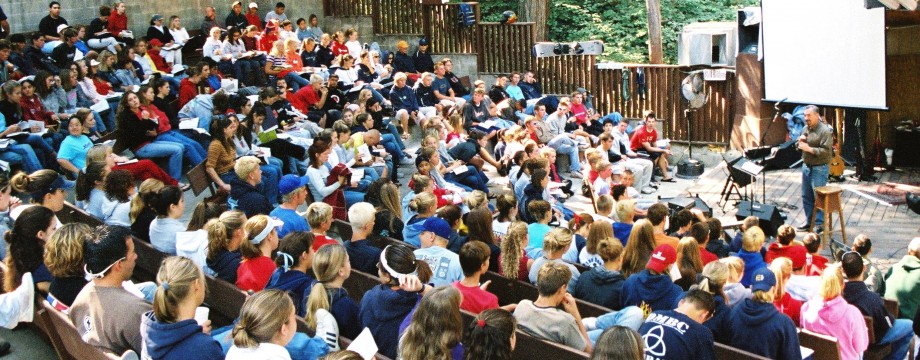
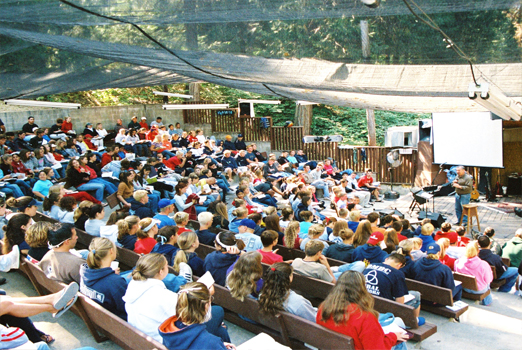
cropped-outdoor-chapel-51.jpg“Ask me anything you want about my personal, private life. You can dig as deeply as you want to dig. You can probe as thoroughly as you want to probe. No question is out of bounds. So fire away.”

With those words reverberating throughout the chapel, my role for the week or weekend as a camp or conference speaker begins.

And my, oh my, do these students ask! Anything, and everything. And all the while, under their intense gaze, I try my best to answer their every question — the good, the bad, and the ugly, of which there has been much in all three categories in my 61 years — as honestly, yet discreetly and appropriately, as I possibly can. 

Why take that risk? you might wonder. Well, there is a method to my madness. My calculation is simply this: Vulnerability begets vulnerability. If I am honest with them, they will be honest with me, with their counselors, and most importantly, with God.

And they are.

My follow-up invitation to them is this: “I’ve just handed you a 3×5 card. I want you to imagine that you could ask God anything. Anything. Anything about your life, about your world, about your relationship with Him. Anything. If you could ask God anything, and know that you would get an honest answer, what would you ask?”

Of course, through the rest of the camp, I always strive to work as many answers into my talks as I can. Often, I even end up writing a new talk just to deal with a certain question if I sense that there are many in the audience wrestling with the same issue. I’ve done this for years, and it always give me a sense of the pulse of the camp, a tremendous advantage for any camp speaker.

And my, oh my, do these students ask. Anything, and everything.

Serious questions. Heartfelt questions. Difficult questions. Nearly-impossible-to-answer questions. Rarely, if ever, do I get a nonsense question. Life is just too real, too challenging, too painful for these students to waste this opportunity on the trivial.

Here is a random sample of the questions that the students asked  of God at my last camp just a few short weeks ago. A Junior High/Middle School Camp, which included some students as young as 10 and as old as 14. If they could ask God anything, they would ask Him this…

Why don’t you listen when I need your help?

Why is the world broken?

Why did you let my father molest/rape me?  (He went to prison for  this, was tried and convicted.)  I just want to know why?  I am in pain.

Why can’t I have more friends?

Who gave birth to me?  What happened to them?

If you could have prevented sin, why didn’t you?

Why is my mom a crackhead and why does she choose drugs over me?

How did Jesus feel when He was all alone, when His friends left Him?  What should I do when this happens to me?

Why is there death?

Why is life so hard?

Just a few of the over four hundred questions that I collected and compiled that week, and those are just from Page 1; I haven’t even gotten to the 2nd page yet!

It’s enough to make you cry, isn’t it?

As I wrote a moment ago, I did indeed try to answer as many of these questions as I could throughout my 9 talks that week. But even so, I only scratched the surface. And of course, my several pages of questions do not include the dozens of questions I was asked personally as I met with and talked to many of the students during their free time.

All of this to say that I have ample material to include in this blog. In the coming weeks, I will endeavor to address several of these questions here in this forum.

My hope is that these questions, and the Bible’s answers, will strike a chord (pleasant-sounding, of course) with many of my readers.

But for now, I just wanted to give you a taste of what these students are dealing with.

The next time you see a junior high or high school student flying by on a skateboard, tagging a wall with some spray paint, or acting disrespectful, pause and pray for him or her. They’re not just kids. They are people. Many of them people in pain. Many of them wrestling with some punch-to-the-gut kinds of confusing questions that in a better world they would never need to ask.

Pray for their parents (step-parents or guardians). Pray for their siblings. Pray for their teachers, counselors, youth pastors (if they have one). And pray that through the dense fog of their pain, they will begin to see the bright light of God’s hope and healing, grace and mercy, care and compassion that He longs for them to feel.Hartlandcamp

Categories: Uncategorized | 2 Comments

The “Wonder” of It All…

Guess you’re never too young to teach an old dog a new trick.

In this case, “young” refers to my fifteen-month-old granddaughter, Nora; “old dog” refers to yours truly.

This afternoon, Nora taught me something.

She and I shared an exhilarating experience together. We were at a local park, one that boasts a series of water jets shooting sky-high arrows of H2O over the heads of all the children, the liquid laughter splashing on the ground to the delightful laughs and squeals of every youngster in the place.

To put it simply, Nora LOVED IT.

Nora Water

Nora just couldn’t seem to get over the magic of a concentrated stream of water spontaneously shooting up from the ground. She delighted in the refreshing sensations — on this 90 degree day — of having her entire body drenched in the wild wetness and coolness of the spray. She looked on in amazement as individual jets suddenly and without warning turned off, only to spring back to life as if they each were a living thing. She ran through the water with reckless abandon, totally immersed (no pun intended) in the moment. 

In a word, Nora was lost in the WONDER of it all.

And I’ll admit, a part of me looked on with envy.

Nora wasn’t for a split-second encumbered with the worries of the day which tend to weigh me down. She couldn’t have cared less about a teetering economy or the latest terrorist threats. She took no time out of her fun-filled afternoon to concern herself about her health and how the unknowns of “Obamacare” might affect her physical and monetary wellbeing in the future. She wasn’t worried in the least about the unemployment rate, or her prospects of landing her dream job, or meeting and marrying her best friend and soulmate. She didn’t even consider the possibility that the Dodgers might soon blow a 5 1/2 game lead and fall out of first place in the National League West because Hanley Ramirez jammed his shoulder after tumbling over a concrete wall while catching a foul ball in the cozy confines of Wrigley Field.

Nora just lived in the moment, singularly focused on the wonders of the world around her. Wonders worthy to behold. And in that moment, she knew no fear. She didn’t have to. I, along with her parents and my dear wife, were there watching over her. In that moment, she felt free to embrace the joys of the wonderment she was experiencing.

Something that thrilled my heart no end, because to some degree I was able to provide that for her.

Frankly, I rue the day when she will wake up a full-grown adult focused on the problems — the stresses and the strains — that life has become for most of us.

On that future day, I will be sad. Sad that she has lost something. Something precious. Something priceless.

She will have lost the wonder of it all.

I will be sad because it is a big wide world out there, filled with wonders that, even as an adult, she will have yet to experience. Sad because there is no reason that she, nor I, nor you, nor any of us must lose the wonder of it all.

Losing the wonder of it all was my own choice. A choice I didn’t have to make. A choice I never purposed to make. But a choice I made, nonetheless.

But, thankfully, a choice I can reverse. And so can you.

So with all of this talk about how exhilarated I was this afternoon to witness the exhilaration of my precious little Nora… and my lament at her someday losing the wonder of it all… and the sadness that I will feel if/when that day comes…

Do you suppose that every time I fail to see the wonder in the white puffy clouds floating across a powder-blue sky, the whistle of the wind as the leaves of our many trees kiss each other, the purr of a cat, the twitch of my little puppy as he dreams of his own wonders while sleeping securely in my lap, the rapturous refrains of a melodious masterpiece, the wonder that I am alive to see and hear and experience this wonder we call “life”… 

Do you suppose that God is sad? Sad that to some degree, I have lost the wonder of it all?

Categories: Uncategorized | 1 Comment

Jesus on Trial

They were ready to kill Him on the spot.

They had the motive — Jesus healed a man on the Sabbath. They had the means — an inexhaustible supply of rocks. They had the opportunity — Jesus stood before them, a sitting duck for their accurately aimed stones.

In this PODCAST, you will hear Jesus on trial for His life. And in defending His life, He will call a full complement of five witnesses to testify on His behalf. A quintet of compelling witness who will leave no doubt that Jesus is exactly who He claimed to be — God Incarnate, God in the flesh.

Your faith will be bolstered, your spiritual life strengthened enormously as you listen to Jesus on Trial.

Please note that depending upon your web browser, it could take up to 60 seconds for this podcast to play.

HAPPY LISTENING!

Categories: Uncategorized | Leave a comment

All That Glitters is Not Gold.

Asaph had it all.

But he didn’t even begin to realize that.

Asaph is anything but a household name. Yet he boasted quite an impressive résumé: as David’s handpicked choir director – first in the Tabernacle and eventually in the Temple; as a prolific songwriter (twelve of his psalms are included in the Old Testament Psalter); as a prophet; and as a good role model (evidenced by the fact Asaph’s sons followed in their father’s footsteps and became Temple choir singers).

Yet, with all of that, Asaph nearly threw it all away.

Somewhere along his spiritual journey, Asaph fell prey to a sickness of the soul that infects many people of faith. At some point in his ministry, for reasons clearly spelled out in Psalm 73, Asaph became jealous of wicked people – a hideously dark disease that, if the truth be told, has at times affected me as well. 

Has it ever affected you? Let’s find out. Check out Asaph’s astonishing admission to see if you can relate.

Asaph honestly acknowledged that “I almost lost my footing. My feet were slipping, and I was almost gone.” To which I say, Thank God for genuinely authentic people. People whose approach to life is, “What you see is what you get.” People who are poor performers. They cannot act. They will not pretend to be anything other than what they truly are. The kinds of spiritual leaders those in the “Millennial Generation” (see my previous post) crave.

Give Asaph credit; he knew that he was in spiritual peril, about to flush his faith. But why? What threw him into such a traumatic tailspin? Keep reading.

“For I envied the proud when I saw them prosper despite their wickedness.”

There it is. The heart of the matter. Asaph compared his life of strict spiritual discipline and denial to the wanton wickedness that the undisciplined pleasure-seekers surrounding him enjoyed. And to Asaph (not to sound clichéd about it), life seemed utterly unfair.

Was he right? You be the judge: “(The wicked) seem to live such painless lives; their bodies are so healthy and strong. They don’t have troubles like other people; they’re not plagued with problems like everyone else. They wear pride like a jeweled necklace and clothe themselves with cruelty.

“These fat cats have everything their hearts could ever wish for! They scoff and speak only evil; in their pride they seek to crush others. They boast against the very heavens, and their words strut throughout the earth… Look at these wicked people – enjoying a life of ease while their riches multiply.”

Except that he was wrong; dead wrong. Perceptions may be reality, but not in this case. Asaph’s view of  “the wicked” was skewed from the start, something he thankfully came to realize before it was too late.

Sure, Asaph’s life wasn’t the bed of roses he might have hoped for or expected when he chose to follow God. He lamented (a polite word for whined), “Did I keep my heart pure for nothing? Did I keep myself innocent for no reason? I get nothing but trouble all day long; every morning brings me pain.” Sound like anyone you know?

Fact is, life can be tough, very tough. Tough for the righteous. And tough for the wicked, no matter how hardy they might party in order to try to dull their pain with their pleasure. But in the end, it’s all just a mirage.

As Asaph clearly came to see.

Upon reflection, Asaph arrived at four profoundly insightful conclusions:

(1) Had Asaph given in to his envy of the wicked, and flushed his faith in the process, he would have let a lot of people down. People were watching him, just like people are watching us. Fact is, we don’t go down alone; we invariably take a lot of people down with us – people who trust us, look up to us, respect us. That was a price Asaph was not willing to pay.

(2) Payday will come some day. Sure, the “wicked” may be having the time of their lives now… for a little while. But the “passing pleasures of sin” do pass. And that’s the point. And when they do, the wicked are left holding a handful of nothing, except for a bunch of fading memories, and the crushing consequences of their foolish choices.

(3) The wicked reduce themselves to living like beasts, governed only by their carnal cravings and animal appetites. Gone is their dignity, sacrificed on the altars of their depravity. Lost is their self-respect, forfeited by their disrespect of the God who made them.

(4) (And most significantly…) If Asaph turned his back on God, he would be letting Him down — the One, the only One, who never would and never could let him down. Nothing was worth that, for Asaph or for us.

As Asaph so correctly concluded, “It is good for me to draw near to God.” Yes it is, Asaph. And you know what? It is good for us to do the same.

Categories: Uncategorized | Leave a comment

Guess Who Has a Dynamic Personality…

I am so sad.

I’ve got to wait over 11 more months until my favorite holiday of the year — the 4th of July — rolls around again. Not because I am especially patriotic, mind you. But because Independence Day is the one day out of the year when I can legally blow things up.

It’s true. I LOVE fireworks. I’m addicted to the pops, bangs, and whistles of the holiday. I stare amazed at the sheer energy released every time a match is applied to a fuse and it burns itself down to the inevitable, earth-shattering, ear-ringing “BOOM!” The dynamic power unleashed in that controlled explosion called a firework is to me irresistible.

But here’s a thought, a thought that makes me smile: We don’t have to wait for the next 4th of July. The next time we want to see dynamic power unleashed in a controlled explosion, all we need to do is to look into a mirror.

Don’t believe me? Then believe Jesus who said,

“But you shall receive power when the Holy Spirit has come upon you” (Acts 1:8).

Power. Dunamis. The Greek word from which we get our English word, Dynamite. 

As a Holy Spirit-indwelt Christian, you have the dynamite-like power of the 3rd person of the Trinity dwelling right inside of you, making you a veritable powerhouse of potential. 

You — Yes, YOU!!! — have a dynamic personality.

“How dynamic?” you ask. Just look at Peter.

At the very moment when Jesus needed him the most – just after His arrest and just prior to His crucifixion – we find Peter doing and saying the unthinkable. We join the narrative in Matthew 26 where we read,

“Now Peter was sitting out in the courtyard (with Jesus’ executioners, no less), and a servant girl came to him. ‘You also were with Jesus of Galilee,’ she said. But he denied it before them all. ‘I don’t know what you’re talking about,’ he said. Then he went out to the gateway, where another girl saw him and said to the people there, ‘This fellow was with Jesus of Nazareth.’ He denied it again, with an oath: ‘I don’t know the man!’ After a little while, those standing there went up to Peter and said, ‘Surely you are one of them, for your accent gives you away.’ Then he began to call down curses on himself and he swore to them, ‘I don’t know the man!’ Immediately a rooster crowed. Then Peter remembered the word Jesus had spoken: ‘Before the rooster crows, you will disown me three times.’ And he went outside and wept bitterly.”

Peter was the guy, remember, who swore in front of the other disciples that he would gladly die for Jesus. Yet, when the moment of truth arrived, Peter folded like a house of cards. Not very heroic by anyone’s measure. Hardly a controlled explosion of dynamic power.

That was then. Some seven weeks later, on the day of Pentecost, before an assembled crowd of thousands, guess who stood before the masses, and heroically and explosively and dynamically declared,

“Jesus of Nazareth, a Man attested by God to you by miracles, wonders, and signs which God did through Him in your midst… you have taken by lawless hands, have crucified, and put to death.” 

That’s right. Peter.

Whoa. What in the world happened to Peter? Something utterly not of this world. Peter was indwelt by the Holy Spirit. (You can read all about it in the opening verses of Acts 2.) 

The Holy Spirit transformed Peter from a weepy, self-confessed coward into an oratorical dynamo whose fearless preaching (at the risk of his life, I might add) resulted in the birth of the Church as three thousand people answered his call to place their faith in Jesus.

Similar stories abound. Examples…

Stephen was empowered by the Holy Spirit. 

The Apostle Paul was empowered by the Holy Spirit. 

Barnabas was empowered by the Holy Spirit. 

Paul prayed that the Christ-followers in Rome would be empowered by the Holy Spirit. 

The Christ-followers in Corinth were empowered by the Holy Spirit. 

The Christ-followers in Ephesus were empowered by the Holy Spirit. 

The Christ-followers in Thessalonica were empowered by the Holy Spirit. 

Pastors Timothy and Titus were empowered by the Holy Spirit. 

Oh, and by the way, YOU are empowered by the Holy Spirit. Yes, little ole you! 

The 3rd person of the Triune Godhead resides within you. You have the power of Almighty God right at your fingertips: The power to say “No” to temptation. The power to live a victorious Christian life. The power to overcome the trials that beset you. The power to be a blessing in the lives of the people around you. Power, power, power. You possess power – the dynamic power of the Holy Spirit.

Let there be no doubt. When you received Jesus into your life, you got a Heavenly bonus. The Holy Spirit took up His residence right inside of you, along with His promise that He will never ever leave you. He lives in you forever, along with His power, giving you one dynamic personality.

Categories: Uncategorized | Leave a comment

Blog at WordPress.com.