Posts Tagged With: pain

Mary, Did You Know???

Mary’s was NOT an easy life. 

Consequently, she is a woman whom I greatly admire. As should we all.

Just imagine what it must have been like to walk in her sandals, or to ride on her donkey.

At the time of the angelic visitation announcing her miraculous pregnancy, Mary was assured that her baby was the vital part of God’s plan of salvation. Not only for her, but for the whole world.

Yet we know that very late in her pregnancy, Joseph and Mary were forced to make the arduous journey from Nazareth-Bethlehem,60 miles as the crow flies. A harrowing 3 to 5 day journey under the best of conditions into what was for all intents and purposes a different country far removed from Nazareth geographically, culturally, and demographically. More like 5 to 7 days considering Mary’s condition, walking or on camelback, through treacherous terrain, exposed to the elements and the ever-present threat of bandits, all to register for yet another Roman tax.

This poor couple living, as we learn a little later in the Gospel accounts, barely above the poverty line, having even what little they had plundered by their corrupted government officials.

Mothers, think back to what it was like when you gave birth to your firstborn child – the fears, the insecurities, the feelings of inadequacy. Now imagine that when you did give birth, it was not in the clinical cleanliness of a hospital room or birthing center. Imagine you were in a cave, dark and alone, unsanitary to the extreme, no nurse, doctor, or midwife to help you, and you are all of 13 or 15 years old, in what was essentially a foreign country, away from your family, with only your fiancé to help you.

Add to all of that the political climate of the world Mary was living in – a world of crushing oppression and a brutal and barbaric military occupation. One that would soon force the holy family to flee to Egypt in the wake of Herod’s maniacal and murderous attempt to kill the baby Jesus in His crib.

Mary was completely obedient to and submissive to the will of God for her life, whatever that might be. She stepped out in obedience to God, and yet everything that could go wrong did go wrong.

Which begs this question:

Why do we expect that if we are indeed obedient to the will of God, everything should go right for us, go good for us? That our obedience buys us a trouble-free existence?

Mary would beg to differ. So would Abraham.

As the OT begins, Abraham obediently followed God’s call to leave his country, his extended family, his friends, and his home, everything to travel to a Promised Land that he had never even seen before.

While en route, his beloved dad died. No sooner had he settled in that land, a severe famine hit the land and down to Egypt he was forced to go. Welcome to the Holy Land, Abraham.

Abraham did everything right, and everything that could go wrong did go wrong. It happened to Abraham.

And as the NT begins, the exact same thing happened to Mary. 

Maybe, just maybe, it has happened to us. Or will happen to us. Unexpected, uninvited, and unwanted trials and tribulations may well be proof-positive that you and I are right smack dab in the middle of God’s will. Unexpected, uninvited, and unwanted trials and tribulations may well be the precursors to God’s richest blessings.

So don’t despair, no matter how rough your road. God never abandoned Abraham; He surely never abandoned Mary, Joseph, and Jesus. And we can be sure that He will never abandon us.

The pathway to God’s blessing is often strewn with boulders. Speed-bumps abound. But as we learn from this Christmas story, with Mother Mary showing us the way, God’s blessings always win out in the end.

Just one of the snapshots of Christmas from last Saturday night’s Safe Haven Christmas celebration. The podcast of the full five of these snapshots can be heard by clicking HERE.

MERRY CHRISTMAS!!!

Categories: Uncategorized | Tags: , , , , , , , , , , , , , , , , , , | Leave a comment

On the Outside Looking In

Ever feel like you are on the outside, looking in? You don’t need to.

I am SO excited about this PODCAST. Excited because so much is about to become so clear as we look at this together.

If you took the entire Sermon on the Mount, and boiled it all down to one singular soundbite, the over-arching theme, its one takeaway…

It would be Matthew 5:20, “But I warn you—unless your righteousness is better than the righteousness of the teachers of religious law and the Pharisees, you will never enter the Kingdom of Heaven!”

OK. But… What in the world did Jesus mean by that?

We are about to find out. 

And I promise you this. When we do find out, we will be so incredibly encouraged.

Please note that depending upon your web browser, it may take up to 60 seconds for the podcast to begin to play.

HAPPY LISTENING!!!

Categories: Uncategorized | Tags: , , , , , , , , , , , , , , , , , , , , , , , | 3 Comments

Rejection: What Should I Do When It Happens to Me?

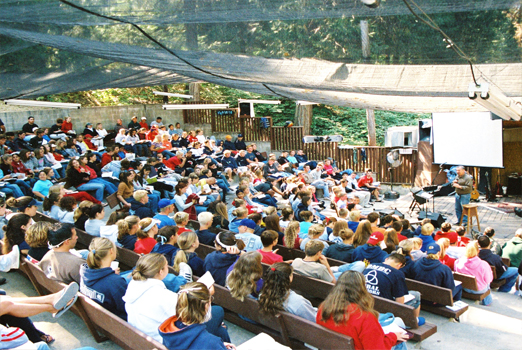
It’s one of the saddest verses in all of the Bible, and yet (ironically) one of the most encouraging. Especially for one very special junior high student.

The verse to which I refer is John 1:11, which reads in the New Living Translation,

Jesus came to his own people, and EVEN THEY rejected him (emphasis added).

In other words, Jesus wasn’t only rejected by His own people. Jesus was rejected by nearly everyone.

A sad verse indeed. Yet a verse that means the world to at least one junior higher who shared with me that if he was given the chance to ask God any question, he would ask Him this:

How did you feel when you were all alone, when your friends left you?  What should I do when this happens to me?

Imagine those heart-wrenching words coming from a twelve year old. Far too young to feel the torment of rejection. But feel it, he did. He does. And truth be told, throughout his life, he will feel it again and again and again.

Just like us.

And I can tell you from personal experience spanning now some six decades, and having felt the rejection of more people than I can count, reeling from rejection never gets any easier. Especially when the person who rejects us is someone whose approval and acceptance we desperately seek, want, or need.

How would Jesus have answered this student’s question?

Before I attempt to answer on His behalf (something I am always hesitant to do), let me first frame the answer by pointing out the following:

The rejection of Jesus became for Him a fact of His troubled life, His entire life. From birth to death.

His own mother was ostracized by her community because the word was whispered around that she got pregnant outside of marriage. Knowing that Joseph was not Jesus’ father, some concluded that Mary had been raped by a Roman soldier. Others merely concluded that Mary had violated her engagement by cheating on her husband-to-be.

Jesus carried that stigma throughout his adult life. His enemies even used it to cheap-shot Jesus when they mocked Him by asking Him (John 8:19, Amplified Bible),

Where is this father of Yours?

They took another shot at Him in John 8:41,

We are not illegitimate children and born out of fornication.

Implication: We’re not illegitimate children, like you!

What a hateful and hurtful thing to say.

Next, imagine this: When Herod heard that Jesus had been born in Bethlehem, he immediately ordered every Jewish baby boy two years of age and under to be barbarically butchered in a vain attempt to kill the baby Jesus in His crib. You talk about rejection. Just imagine what it would be like a) to be hunted by the government as an enemy of the state, and b) to have on your conscience the deaths of dozens of baby boys, all because the authorities were trying to kill you!

We know that Jesus’ own brothers rejected Him (John 7:5).

The Romans, of course, eventually killed Him.

But what about the crowds? The masses of people who dogged His every step? Study the story carefully and you will discover that every single time a crowd formed to follow Him, they eventually walked away. As soon as Jesus failed to give them what they wanted, they turned tail and left Him all alone.

Perhaps the most poignant scene is in John 6, just after Jesus miraculously multiplied the loaves and the fishes. The thousands came back the next day in order to receive their next free meal. When Jesus basically told them that His purpose was not to be seen as some sanctified Meals on Wheels provider of free lunches, they walked. In the wake of the rejection of these thousands of freeloaders, Jesus sullenly turned to His twelve disciples and asked what must have been a gut-twisting question,

Will you also go away? And do you too desire to leave Me? (John 6:67, Amplified Bible)

I’ll give you just one more. Did you know that Jesus was even rejected by His Heavenly Father?

It’s true. When Jesus voluntarily took upon Himself our sins while hanging on the cross, in that terrible moment Jesus paid in our place the penalty that you and I deserve. God the Father, being so absolutely holy that He cannot even look upon sin, turned His back on His Son and abandoned Him to the white-hot fury of His wrath, as Jesus essentially went to Hell so that we wouldn’t have to. 

In that moment of absolute agony, Jesus cried out from the cross these words that ought to send chills down our spines:

My God, my God, why have you abandoned me? (Matthew 27:46, New Living Translation)

Put that all together, and let me ask you: How would Jesus answer a junior high student when asked this all-consuming question,

How did you feel when you were all alone, when your friends left you?

He would probably say something like this:

It hurt. It hurt me deeply. In fact, the pain I felt every time someone rejected me was by far the worst pain that I ever felt.

And that pain hasn’t stopped. Every day, all around the world, there are people who hear about me only to reject me.

Every day, all around the world, there are people who once claimed to love me, to worship me, to pray to me, who for whatever reason abandon me and walk away.

There is no greater pain in all the world than to love someone, only to have that love rejected. There is no greater pain in all the world than to have created someone, and blessed them with this miracle that we call life, only to have them reject their Creator.

So believe me when I say that I hear your question, and I “get it.” I know up close and all-too-personal the pain behind your question.

I never wanted the people I created to reject me. And I certainly never wanted them to reject each other. And I definitely never wanted them to reject you.

I can only promise you that I will never reject you. It’s a promise that I made to you, and a promise that I will keep forever. My promise goes like this: “Never will I leave you; never will I forsake (or abandon) you” (Hebrews 13:5).

Let me ask you: How would Jesus answer a junior high student when asked this all-consuming question,

What should I do when this happens to me?

I believe that Jesus would answer that question something like this:

You are my friend. You will always be my friend. And as your friend, I am going to answer your question as honestly as I can.

I know that you are hurting. Pain is never pleasant. But your negative pain can be turned into a positive purpose if you’ll consider these few ideas:

First, allow the pain of your rejection to remind you of the pain you can cause others when you reject them. 

The neat thing about pain is that pain keeps us sensitive to the feelings of others around us. Our pain can help us to be a little more patient, a little more understanding, a little more compassionate, and quite a bit more gentle in our responses to others. 

So the next time you treat someone else in an insensitive, unkind, hurtful sort of way, you may be causing them to feel the same hurt that you are feeling now.

Second, allow the pain of your rejection to remind you of the pain that I feel each and every day. Your pain is a window into my soul. You will now be able to relate to me on a much deeper personal level than you ever could if you never felt the pain of rejection. You and I now share something in common. I know all about your pain, and now you know about mine. In a sense, you and I now share an intimately personal experience. The bond that we can now build between your heart and my heart is worth the pain of rejection.

And third, please, please, please allow the pain of your rejection to become a power motivation in your life never, never, never to reject me.

There will be times when you will be tempted to think that I have failed you, or let you down. Maybe there will be a prayer that I don’t answer, a relationship that I don’t fix, a problem that I don’t solve. You may be tempted to get mad at me, or fear that I am mad at you. You might even be tempted to think that I have rejected you. But know this: I haven’t!!! It’s just that my plans for you and my thoughts about you are so great that there will be times when it’s hard for you to understand them, or you will feel the need to question them. I get that. It’s OK. You have my permission to question all of those things, and to tell me exactly how you feel. But I promise you that I will never, ever reject you.

Please don’t make the fatal mistake of rejecting me. When times get tough, let’s hold onto each other like never before. And I promise you that together, we’ll get through it just fine.

Wow. Quite the question from a junior higher to God. Thank you for being brave enough to ask it. I only hope and pray that my answer gives you some measure of the comfort of God’s grace and peace in your life.

Categories: Uncategorized | Tags: , , , , , , , , , , , , | Leave a comment

The Search for the Holy Grail

Get ready to be encouraged. Super-encouraged, truth be known.

I say this because THE THING that everybody wants (and I say “everybody” without any fear of contradiction, without any worry of exaggeration)… THE THING that everybody wants is readily available, and ours for the asking.

It’s just that so many people have no idea what it is they really want. But trust me, we all want this…

You could call it “The Search for the Holy Grail.”

The Holy Grail: defined in two ways by our friends at the Webster Dictionary website: 

1. In its formal usage: The cup/chalice from which Jesus supposedly drank in the Upper Room during the Last Supper, sought after (some would say) protected throughout the Middle Ages by the Knights Templar.

Which is NOT the Holy Grail to which I refer.

2. Informal usage: Something that we all very much want, but that is very hard to receive or to achieve.

Which is indeed the Holy Grail to which I do refer.

However, I would dispute the part about “very hard” to receive or to achieve. 

As we are about to discover in this PODCAST, it’s not hard at all to find and to enjoy that Holy Grail — that which we all so desperately want and need (even if we don’t realize what the “that” is for which we are so desperately searching).

Please note that depending upon your web browser, it may take up to 60 seconds for the podcast to begin to play. HAPPY LISTENING!!!

Categories: Uncategorized | Tags: , , , , , , , , , , , , , , , , , , , | Leave a comment

“Why? God, Please Tell Me, Why?”

Why did You let my father molest/rape me?  (He went to prison for  this, was tried and convicted.)  I just want to know why?  I am in pain.

As stated in my previous post, from time to time (at a rate of one or two per week) I am going to answer questions that I received from Junior High/Middle School students last month at camp. I asked them to write down for me the one question they would ask God if given the chance.

I will answer each question as if I am speaking directly to them…

I know you are in pain. Pain that I cannot even begin to imagine.

Let me start by stating right up front that “Why?” questions are the most difficult questions to answer. We don’t always know the reasons why.

Oh sure, I could tell you that we live on a fallen planet where bad people do really bad things to good and precious people like you. That this is all the result of Adam and Eve’s sin. That it’s ultimately the devil’s fault. And while there is some truth to each of those statements, you deserve better than a trio of trite clichés, none of which is an adequate explanation for the pain you carry every single day.

What I can tell you is this: Jesus was born into an equally pain-filled world. Within months of His birth, a very bad man by the name of Herod wanted desperately to kill Him. Herod thought of Himself as the “King of the Jews.” So when the Wise Men showed up asking for the whereabouts of the authentic “King of the Jews,” Herod exploded. He ordered every baby boy in Bethlehem two years of age and under to be mercilessly slaughtered. Herod’s murderous rampage caused the streets of Bethlehem to flow with the blood of these innocent toddlers.  The anguished wails of their moms and dads, brothers and sisters, echoed throughout the town.

Like you, a part of me cries out to God the single most painful question you or I could ever ask: Why? Why did so many innocent children have to die such a horribly bloody death? Why did innocent moms and dads have to watch helplessly as their government slaughtered their children? Why didn’t God stop the slaughter? Why did God let Herod get away with it?

Well, nowhere in the story (Matthew 2:16-18) does the Bible answer that hauntingly elusive question, “Why?” But it does answer an equally important question — perhaps an even more important question — “Where?” As in, “Where were You, God, when this senseless slaughter was taking place?”

The answer? (Read this slowly, and allow the power of this answer to sink into your soul.) Jesus was right there in the middle of the horror.

Remember that He was the object of the hate. He was the target of the murderous thugs who rode into Bethlehem that night. He was the focus of the frightful rage that erupted into the slaying of all those little kids. He was right in the middle, sharing and feeling the pain of every baby boy who died in His place. He cried bitter tears as He heard the gut-wrenching cries of all those mommys and daddys who lost their children because of Him. He was right there in the middle of it all.

Thankfully, through the intervention of an angel, Jesus didn’t die that night. But the day did come when Jesus died an even more horrific death at the hands of these same Romans. On that dark day, Jesus died for you, Jesus died for me, and Jesus died for every baby boy in Bethlehem who had died for Him on that infamous night. Yes, every single baby butchered that night was greeted in Heaven that night by the waiting and welcoming hands of God.

Good  ALWAYS wins; evil ALWAYS loses. Always.

OK, so now watch this: Where was God during that entire time that you were being horribly molested by your dad? Right there beside you. Sharing your pain. Feeling your fear. Cradling you in His arms while you cried. And promising that what your dad intended for evil, God will use for your good. And for the good of many, many people.

One of my Old Testament heroes is named Joseph. His brothers tried to murder him. At the last minute, they changed their plan and sold him as a slave. He was purchased by an Egyptian and forced to live in a foreign country, away from all of his family and friends. He was falsely accused of rape and wrongly imprisoned. He suffered unimaginably as he rotted away in an Egyptian dungeon for nearly 13 years for a crime he did not commit. 

“Why?” Why did God let that happen? Why did God let the brothers get away with that? Why didn’t God stop them?

We don’t know why. But we do know where. Where was God during those years of imprisonment? Right in the dungeon with Joseph. 

After 13 years, Joseph was miraculously released from his cell (just as you were finally released from your prison of molestation and rape). Even better, God then used Joseph to save His people from the ravages of a famine that hit their land. And when Joseph faced his brothers who had sold him as a slave, he said something that I hope you will memorize. Words that changed my life; words that can change yours as well. Because what was true of Joseph is true of you. Joseph said to his brothers: 

You intended to harm me, but God intended it all for good. He brought me to this position so I could save the lives of many people (Genesis 50:20, New Living Translation).

Your dad tried to harm you. But God will now transform your pain-filled heart and violated body into the beautiful and radiant person that you are now becoming. God is so good at that. He takes the ashes of the wrongs that we suffer and transforms them into something breathtakingly beautiful to behold. A whole new YOU!

Just think of all the young women you will be able to help and heal someday because of your story. Think of how God allowed you to survive the darkest of nights so that His sunshine of this new day can sparkle through you to others. Think of how His power spared you from a situation that could have been so much worse. Think of the radiant diamond that you have become after being crushed so many, many times.

The very fact that you could come to a Christian camp and be given the opportunity to ask of God that one most important question — Why? — proves where God was while that was happening. Right there with you.

He is with you now.

And I promise you that the very thing your dad did to harm you is the very thing that God will now use to bring SO MUCH GOOD to so many, many people. Yes, the day will come — sooner rather than later — when you will be able to pray,

God, I would never want to go through that again. But I thank You for allowing me to go through it once.

Categories: Uncategorized | Tags: , , , , , , , , , , , , , , , , , , , | 3 Comments

Want to Know the Heart of God? Look Where You Least Expect It

Have you ever wanted to know the heart of God? I mean to really, truly know it – deep down where it counts, in the hidden depths of your sizable soul? To know what He thinks, what He feels, what He experiences every day of His life?

I have. And the answer came from the unlikeliest of places.

For the longest time, the picture of Jesus that dominated my thoughts was that of a happy-go-lucky, spirited young man sprinting through the countryside with a smile on His face and a spring in His step. A man beaming with blazing optimism, brimming with boundless joy. A guy on top of the world. Because, after all, He created the world. He owned it. So of course, He lived to enjoy it.

But try as I might, I could not find that Jesus in the New Testament. Nor, for that matter, did He appear in the Old.

In his place, I discovered a very troubled Jesus. Someone who bore the weight of the world on His sagging shoulders. Someone who every day encountered everyday people – people just like you and just like me. People whose challenges seemed overwhelming. People whose difficulties were difficult even for the Son of God to understand.

The deeper I dug into the Scriptures, the more this alternate picture of a melancholy Jesus began to emerge. The Jesus about whom it was written, “He was hated and rejected; his life was filled with sorrow and terrible suffering” (Isaiah 53:3 CEV).

That didn’t sound very happy-go-lucky to me.

“He suffered and endured great pain for us” (Isaiah 53:4 CEV). An intense, unrelenting suffering that He carried not only during His trials and crucifixion, but throughout His life and His ministry as well.

For instance, did you know that Jesus apparently lost His adoptive dad, Joseph, at a relatively young age, and was therefore raised by His single mom, Mary? While this desperate situation doesn’t get a lot of press, we do get a glimpse into Jesus’ household when He stopped dying on the cross just long enough to assign to John the care of His beloved mom. Add to that that Jesus’ brothers all rejected Him. His enemies hounded Him. Even His disciples deserted Him. None of which makes for a spirited young man to my way of thinking.

“He was wounded and crushed because of our sins” (Isaiah 53:5 CEV). Wounded and crushed don’t sound like the attributes of someone sprinting through the countryside to me.

How about a smile on His face with a spring in His step? I don’t think so. Not when I read, “He was painfully abused, but he did not complain. He was silent like a lamb being led to the butcher” (Isaiah 53:7 CEV).

“Who could have imagined what would happen to him?” Isaiah asked, as a thoroughly appropriate, if unsettling, question. 

Who could have imagined the unimaginable? Who would have anticipated the unthinkable? Who should have expected the unexplainable?

There is a reason we read in the Gospels that “Jesus wept.” Yet, nowhere do we read that Jesus laughed. Think about that for a minute. A smile on His face? A spring in His step? Guess again. 

This theme, the seeds of which are planted in the Old Testament, comes into full bloom in the New, with such confessions such as this: “My soul is crushed with grief to the point of death.”

Yes, Jesus admitted that in Matthew 26.

Rather than beam with blazing optimism, Jesus daily discovered the depths of despair that darkened the souls of the people He loved. And this all-pervading sadness clouded His countenance with heart-rending compassion and never-ending concern.

There is a reason that Isaiah made a point to highlight the raw reality that Jesus’ “life was filled with sorrow and terrible suffering.”

Gaze into His eyes and I think we’d see much more dejection than delight. 

All of which means this: Our worst times might be our best times to know, to experience, to feel the heart of God.

Yes, it’s true. There are some lessons, perhaps our most profound lessons, that can only be learned in the classroom of personal pain. 

So much so that you can take this to the bank: Our worst times might indeed be our best times…

Our darkest days might indeed be our brightest opportunities… 

…to truly know, to genuinely experience, to actually feel the heart of God.

Categories: Uncategorized | Tags: , , , , , , , , , , | Leave a comment

Blog at WordPress.com.