As you will hear in the PODCAST, a veritable banquet table of culinary delights, every tasty morsel of which comes courtesy of the Apostle Paul and his original Galatian readers.
Take a deep breath, pull up a chair, make yourself comfortable… and enjoy!
Thank you for listening, and for sharing this message!!!
Please remember that depending upon your web browser and connection speed, it may take up to 60 seconds for this podcast to begin to play.
Once again, while I am away speaking (at my final conference of the summer), I have not left you Podcast-less!
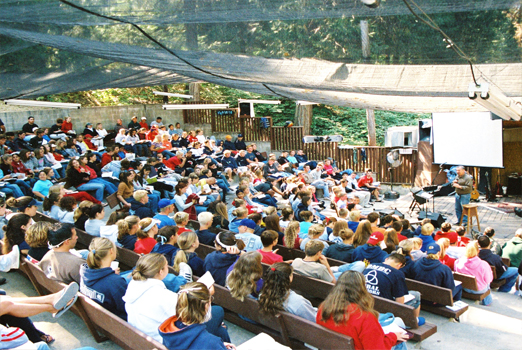
Welcome to Decision Night at Hartland Christian Camp.
As you will hear in the PODCAST, even though this message was not delivered at Safe Haven, it is the perfect followup to last week’s discussion of Passover.
I mentioned last week, and will remind you now, that before His arrest, Jesus had to keep a divine appointment in the Garden of Gethsemane. I didn’t explain that then; I do explain it now.
If you want to know what it meant for Jesus to bear the weight of your sin (and mine), this is THE picture of exactly what that meant.
Please remember that depending upon your web browser and connection speed, it may take up to 60 seconds for this podcast to begin to play.
As you are about to hear in this PODCAST, Peter begins his first lovely little letter literally with a literary explosion. It’s as if he has so much that he wants to say so quickly, that the syllables come pouring out of him like a waterfall of words.
Believe it or not, verse 3 all the way to verse 12 is one long and winding and wondrously scenic sentence. You heard that right. A grand total of 315 words (in the NLT), all of which form one single sentence. Only the first part of which we will discuss now, with so much more rich and glorious truth to follow in the coming weeks.
There is an life-altering, soul-stirring insight embedded in verse 3 that we would do well to consider. Since verses 1 & 2 serve as Peter’s greeting, the letter itself actually begins with Verse 3.
“Blessed be the God and Father of our Lord Jesus Christ.”
A rather remarkable statement given dire circumstances in which Peter’s original readers were living. We’ve already detailed them for you in the previous two podcasts. I’ll simply remind you that due to circumstances beyond their control—an empire-wide persecution at the bloody hands the infamously ruthless Nero—these were precious people—committed Christ-followers each, each our ancestors in faith—who had literally lost everything.
Even to the point of potentially losing their freedom and even their lives.
Theirs were the darkest of clouds with no silver linings.
A very fragile people living on the precipice with no safety net, clinging to their lives lived under the capricious actions of an unpredictable madman.
So if you were Peter, someone who fully understood and appreciated their seemingly insurmountable challenges—fears, insecurities, uncertainties—why would you begin your letter to them with the words,
“Blessed be the God & Father of our Lord Jesus Christ”?
Does that not sound like a typically empty Christian cliché?
What prompted Peter to write with such audacity as to command his readers—including us—to bless God:
“Blessed be the God and Father of our Lord Jesus Christ.”
Even in the absolute worst of circumstances?
Obviously, Peter’s words, “Bless be the God,” did not come out of a vacuum. Fact is, there is a long and rich history to these words, and the life-altering, soul-stirring insight embedded within them.
Peter’s opening line was anything but a cutesy little Christian cliché. Not to his original readers. After hearing this podcast, not to us.
Although this does raise one intriguing question:
Bless God?
“Blessed be the God and Father of our Lord Jesus Christ”?
I thought God blesses us.
How in the world do you and I bless God?
The answer to that question will change your life.
Please remember that depending upon your web browser and connection speed, it may take up to 60 seconds for this podcast to begin to play.
As you are about to hear in this PODCAST, The Apostle Paul made an astonishing statement to the committed-Christ-Followers living in Rome.
In other words, to those living in the belly of the beast.
Rome. The capital of an Empire that redefined hedonism, paganism, unbridled moral perversion.
Rome. The city that literally drank itself into daily stupor on cheap wine and human blood.
Rome. The city of the Colosseum and Gladiator.
Rome. The city where human life held zero value.
Rome. The city of which Paul wrote in Romans 1, “They invent new ways of sinning… They are heartless, and have no mercy. They know God’s justice requires that those who do these things deserve to die, yet they do them anyway. Worse, they approve and applaud others who practice them.”
Rome. The epitome of a religiously/politically lethal environment for every follower of Jesus.
Rome. Where Peter would eventually be crucified.
Rome. Where Paul himself would be beheaded.
So to encourage these embattled believers living right there as residence of this ancient sin-city, Paul wrote this amazing statement in his letter to the Roman believers,
“What shall we say about such wonderful things as these? If God is for us, who can ever be against us?” (Romans 8:31)
In a city where everyone was against these beleaguered believers in Jesus, Paul assured them that God would never be against them. God would never be against then because God was for them.
Guess what? He is for you too!
A blessedly-beautiful three-in-one proposition.
Please remember that depending upon your web browser and connection speed, it may take up to 60 seconds for this podcast to begin to play.
Gifts of Gratitude: If interested in expressing your gratitude in this biblical, tangible way--by giving a gift directly to me, OR giving a gift to a friend or loved-one-in-need in my name--please click on the Gifts of Gratitude tab at the top of this page. Thank you!!!






 Dewey Bertolini