God’s Way Out of Worry

What you are about to read below is just a small but tantalizing taste of what you will hear in this PODCAST, my expanded paraphrase of that wonderful passage, Philippians 4:6-9.  

You can hear the podcast in its entirety by clicking on this podcast player:

Concerning your many personal problems, let me encourage you to do what I do. Over time (of which I have a lot, sitting here in this prison), I have actually trained myself not to worry about anything, but rather to pray about everything. I share with God everything – my joys and sorrows, my victories and my defeats, my thrills along with my spills, my hopes and fears, everything.

And every time I do, He answers my prayers. Not necessarily by giving me everything I want. No! No loving parent would do that – not an earthly father, nor certainly our Heavenly Father. Instead, He does something so much better. He floods my soul with His peace – the quiet contentment and calm assurance that everything is going to be OK.

I can’t explain it. It is in every sense of the word a miracle of God’s loving touch. But especially during those times when I would otherwise be freaking out, it’s like God whispers to me in His wee small voice, “Hey, I’m here. I know what you’re going through. I’m on top of it. I’ve got your back. I will fix this – in my own way and in my own time. So… relax.”

Yes, that’s it! By His grace, because of His grace, I have learned how to mentally and emotionally relax.

Let me teach you this one simple principle: When we worry about stuff, when we become anxious, when we do freak out, we are not dealing with realities. We are mentally inventing fantasies, most of which will never come to pass.

But even if our fears do come to pass, that’s the point, isn’t it? They come to pass. Our problems won’t last forever!

Far too often, we negatively worry about the things that we imagine might happen, instead of positively channeling our energies into dealing with what really happens. What a waste of mental, emotional, and spiritual energy!

So I offer to you this challenge: Develop the mental discipline to think only about those things which are true, that are real. As someone who loves you more than you could ever know, I beg of you to train yourself to think only those thoughts that bring honor to God, rather than thoughts that cause you to doubt God. Doubts about whether or not God is big enough or loving enough to handle your present trials. Trust me, He can handle them. And He will handle them.

Think only those thoughts that are wholesome, not worrisome. Try not to allow your mind to meander into places that will emotionally bring you down, rather than to lovely places that will spiritually build you up.

Mentally focus on the promises of God that will cause you to praise Him, rather than your unfounded fears that will only cause you to question Him.

If nothing else, try to follow my example. I have certainly had my share of struggles. You know about the personal pains that I have endured, and continue to endure. You know that I could make the argument that life has unfairly dealt me — an apostle — a losing hand. But you also know that I choose to regard my present circumstances, even in this prison, as though our good God is dealing me a winning hand. Because you know what? In the end, I will win! And so will you!

Oh, my dear Philippian friends, how I long for you to put into practice all of lessons that I have taught you, both when I was with you, and now as I write to you. All of the principles that you are watching me in real time apply to my own life. In short, how I long for you to learn how to luxuriate in God’s peace, just like I strive to do today, and every single day.


Categories: Uncategorized | Tags: , , , , , , , , , , , , , , , , , , | Leave a comment

The Fast Track to Dynamic Spiritual Development

OK! You may well be wondering, “Are we really going take an entire message to talk about fasting?”

As you will hear in this PODCAST, Yes! We are indeed! And for some very good reasons. 

Just the mention of the word sounds like something out of an ancient Byzantine Orthodox liturgy. Certainly not something relevant to our fast-paced 21st century get-up-and-go, hectic, frenetic lifestyles. Which is precisely the point!

The fact that our lives have indeed become so deliriously fast-paced (Get it? Fast-paced? When talking about fasting? A little pun there.) demands that we build this discipline into our lives.

And just to give you one tantalizing clue as to where we are going with this: Fasting has much more to do with our time than it does with our food. As you will hear me propose in this message, fasting is much more of a time-management issue than it is a food-management issue.


It’s not at all surprising, really, that Jesus followed up His presentation of The Lord’s Prayer with this invitation to fast. Because here’s the thing: We can approach our newly-discovered insights on The Lord’s Prayer with all kinds of renewed enthusiasm and excitement about praying the way Jesus taught us to pray. (I certainly hope you do!)

But the raw reality of the situation is this: Many of us simply don’t have the time or take the time to pray. To get alone with God. To embrace the silence, an endangered species in our day, a silence in which we prayerfully consider the significance of each phrase of The Lord’s Prayer

I mean, if your life is at all typical, as you run here and rush there, you barely have time to eat, let alone time to pray. Which, again, is precisely the point!

So take some time — relatively very little time — to listen to this podcast. It may just change your life in a really, really good way.

Please note that depending upon your connection speed and web browser, it may take up to 60 seconds for this podcast to begin to play.

God bless you as you listen. And PLEASE “Share” the link to this message with your friends.

HAPPY LISTENING!!!

Categories: Uncategorized | Tags: , , , , , , , , , , , , , , , | Leave a comment

Shattered Dreams, Broken Hearts, Unfulfilled Longings

It’s one of the most beautiful verses in all of Scripture… which, ironically, may not actually be in the Bible.

But as you will learn in this PODCAST, it really doesn’t matter. Because what Matthew quite possibly did not write, Paul most certainly did.

Paul ascribed glorious praise and power to His sovereign God who quite possibly Broke.Paul’s.Heart.

Paul’s heart broken by a shattered dream, an unfulfilled longing.

Yet through Paul’s resilience, we can and WILL derive much comfort in the face of our own shattered dreams, broken hearts, and unfulfilled longings.

This podcast is for you!

Please remember that depending upon your connection speed and web browser, it may take up to 60 seconds for this podcast to play.

HAPPY LISTENING, and may God richly bless you as you do.

Categories: Uncategorized | Tags: , , , , , , , , , , , , , , , , , , , , , , | Leave a comment

Debt Relief — Rethinking Forgiveness and Reconciliation from Jesus’ Point of View

Ready to have a huge load lifted off of your shoulders? A load of guilt that God never meant for you to carry?

As you are about to hear in this PODCAST, it is my sense that far too often in the Christian community at large, we display a woefully naive and underdeveloped understanding of person-to-person forgiveness.

Too many times I get the sense that our default position is to demand of the one who is wronged his or her need to forgive the one who wronged him. While at the same time almost giving a pass to the one who committed the wrong in the first place. As if to say, “Yes, it’s too bad that someone hurt you. But you are obligated to forgive that person, whether they acknowledge the hurt they caused or not.”

I mean, is it not one of the most basic of Christian ethics to say to someone who has been deeply wounded, “You need to forgive the person who wronged you, love the person who wronged you, and be reconciled with the person who wronged you. No matter what”? Whether or not they make any attempt to right the wrong that they committed? Whether or not they repent of the wrong, or even admit their wrong? 

A woefully inadequate view of forgiveness which (IMHO) ignores Jesus’ purposeful and particular and pointed and powerful usage of the word “debts.”

A naive view of forgiveness which, in far too many cases, only amplifies the pain caused to the one who is wronged. (When we demand of the one who was wronged a forgiving spirit, while neglecting to suggest any obligation on the part of the one who did the wrong to right the wrongs that they committed, or in Jesus’ words, to settle their “debts.”)

A woefully underdeveloped theology of forgiveness which only empowers and enables hurtful behavior.

Which forces me to ask, Why do we do this? Why do we hold the persons who are hurt accountable to forgive the ones who hurt them, without equally holding accountable those who caused the pain to their biblical obligation to right the wrongs that they committed? Thereby empowering dysfunctional behavior on the part of one who caused the pain in the 1st place? Which only motivates them to continue to hurt others with no accountability whatsoever.

Is this really what Jesus meant to teach here, in the Lord’s Prayer, when He taught us to pray, “Forgive us our debts, as we forgive our debtors”? That no matter what the hurt, how deep the hurt, we just forgive. End of story.

I don’t think so.

You might be in for a pleasant surprise as you listen to this podcast.

Please note that depending upon your web browser and connection speed, it might take up to 60 seconds for this podcast to begin to play.

THANK YOU FOR LISTENING!!!

Categories: Uncategorized | Tags: , , , , , , , , , , , , , , , | 3 Comments

It is Today as it was Then — an Encore Podcast

Welcome to this Encore PODCAST.

hartland

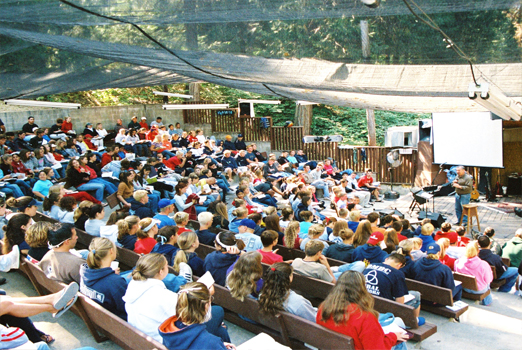
While I am away speaking to a wonderful group of precious college-age students at a place near and dear to my rather sizable heart — Hartland Christian Camp — we travel back into the Safe Haven archives for this most insightful lesson.

As you are about to hear, Jesus lived and taught in a spiritual climate remarkably similar to our own. You will be AMAZED at the parallels.

This will explain to you, so very clearly, why so many “Christians” treat others and behave before others the way they do.

The insights taught here helped me to gain a whole new perspective on the world in which I live, and an even deeper respect for Jesus as He navigated the world in which He lived.

Please note that depending upon your connection speed and web browser, it may take up to 60 seconds for this podcast to begin to play.

HAPPY LISTENING!!!

Categories: Uncategorized | Leave a comment

YouTube

Hey, our Safe Haven, Jesus in HD podcasts are now on YouTube.

Here are a couple of examples. More will be posted each week. Enjoy!

You can access them all by clicking HERE.

Thank you for listening!!!

Categories: Uncategorized | Tags: , , , , , , , , , , | Leave a comment

God is THIS Close. (He REALLY Is!!!)

God can sometimes seem so distant. Remote. Removed from the intricate details of my daily life.

BUT HE’S NOT. As you will discover by listening to this PODCAST.

God is closer to you than you can possibly imagine.

To prove this point, here’s a pop quiz for you. When Jesus wanted to convey to the people He loved — in the single most culturally-emphatic way — just how close God is to YOU, what image did Jesus invoke?


You, my friend, are in for quite a surprise.

Please note that depending upon your connection speed and web browser, it may take up to 60 seconds for this podcast to play. But it’s worth the wait!!! 😉

HAPPY LISTENING.

Categories: Uncategorized | Tags: , , , , , , , , , , , , , , , , , , , , , , , , , , , , , , | 2 Comments

An “Open Letter” to Us All…

While I wish that the writer who quotes Tozer did not make this personal by invoking the name of a prominent pastor, I believe that there is much here for us to consider…


“An Open Letter to John MacArthur From A.W. Tozer: He Being Dead Yet Speaketh”

Editor’s Note: This article is an excerpt from God’s Pursuit of Man by A.W. Tozer and used by permission of WingSpread Publishers.

That every Christian can be and should be filled with the Holy Spirit would hardly seem to be a matter for debate among Christians. … I want here boldly to assert that it is my happy belief that every Christian can have a copious outpouring of the Holy Spirit in a measure far beyond that received at conversion, and I might also say, far beyond that enjoyed by the rank and file of orthodox believers today.

It is important that we get this straight, for until doubts are removed, faith is impossible. God will not surprise a doubting heart with an effusion of the Holy Spirit, nor will He fill anyone who has doctrinal questions about the possibility of being filled.

In light of this, it will be seen how empty and meaningless is the average church service today. All the means are in evidence; the one ominous weakness is the absence of the Spirit’s power. … The power from on high is neither known nor desired by pastor or people. This is nothing less than tragic, and all the more so because it falls within the field of religion, where the eternal destinies of men are involved.

Fundamentalism has stood aloof from the liberal in self-conscious superiority and has on its own part fallen into error, the error of textualism, which is simply orthodoxy without the Holy Ghost. Everywhere among conservatives we find persons who are Bible-taught but not Spirit-taught. They conceive truth to be something which they can grasp with the mind.

If a man holds to the fundamentals of the Christian faith, he is thought to possess divine truth. But it does not follow. There is no truth apart from the Spirit. The most brilliant intellect may be imbecilic when confronted with the mysteries of God. For a man to understand revealed truth requires an act of God equal to the original act which inspired the text. … “Now we have received, not the Spirit of the world, but the Spirit which is of God; that we might know the things which are freely given us of God.”

For the textualism of our times is based upon the same premise as the old line rationalism, that is, the belief that the human mind is the supreme authority in the judgment of truth. Or otherwise stated, it is confidence in the ability of the human mind to do that which the Bible declares it was never created to do and consequently is wholly incapable of doing. Philosophical rationalism is honest enough to reject the Bible flatly. Theological rationalism rejects it while pretending to accept it and in so doing puts out its own eyes.

Few there are who without restraint will open their whole heart to the blessed Comforter. He has been and is so widely misunderstood that the very mention of His name in some circles is enough to frighten many people into resistance.

It is no use to deny that Christ was crucified by persons who would today be called fundamentalists. This should prove to be disquieting if not downright distressing to us who pride ourselves on our orthodoxy. An unblessed soul filled with the letter of truth may actually be worse off than a pagan kneeling before a fetish. We are saved only when our intellects are indwelt by the loving fire that came at Pentecost. For the Holy Spirit is not a luxury, not something added now and again to produce a deluxe type of Christian once in a generation. No. He is for every child of God a vital necessity, and that He fill and indwell His people is more than a languid hope. It is rather an inescapable imperative.

Now the Bible teaches that there is something in God which is like emotion. … God has said certain things about Himself, and these furnish all the grounds we require. “The Lord thy God in the midst of thee is mighty; he will save, he will rejoice over thee with joy; he will rest in his love, he will joy over thee with singing” (Zeph. 3:17). This is but one verse among thousands which serve to form our rational picture of what God is like, and tell us plainly that God feels something like our love, like our joy, and what He feels makes Him act very much as we would in a similar situation; He rejoices over His loved ones with joy and singing.

Here is emotion on as high a plain as it can ever be seen, emotion flowing out of the heart of God Himself. Feeling, then, is not the degenerate son of unbelief that is often painted by some of our Bible teachers. Our ability to feel is one of the marks of our divine origin. We need not be ashamed of either tears or laughter. The Christian stoic who has crushed his feelings is only two-thirds of a man; an important third part has been repudiated. Holy feeling had an important place in the life of our Lord. “For the joy that was set before Him” He endured the cross and despised its shame. He pictured Himself crying, “Rejoice with me, for I have found my sheep which was lost.”

The work of the Holy Spirit is, among other things, to rescue the redeemed man’s emotions, to restring his harp and open again the wells of sacred joy which have been stopped up by sin.

Aiden Wilson Tozer (April 21, 1897–May 12, 1963) was an American Christian pastor, preacher, author, magazine editor and spiritual mentor.

Reprinted from God’s Pursuit of Man by A.W. Tozer, copyright © 1950, 1978 by Lowell Tozer. Previously titled The Divine Conquest and The Pursuit of Man. Used by permission of WingSpread Publishers, a division of Zur Ltd., 800.884.4571.

God’s Pursuit of Man is protected by copyright and may not be copied, reproduced, republished, uploaded, posted, translated, transmitted or distributed in any way.

The actual article can be found by clicking on this link: http://alturl.com/m3h2s.

Categories: Uncategorized | Tags: , , , , , , , , | Leave a comment

Back to the Beginning!

Welcome to this encore presentation of the introductory PODCAST that launched what was then, back in November of 2012, a brand new and exciting and life-changing series: Jesus in High Definition

I know my friends in the midwest will laugh at us here in the Pacific Northwest when I say this. But when it snows — oh, around a half an inch! — the city and state virtually shut down. Well, we are into our third straight day of snow, now approaching a full foot.

snow1

Consequently, it was not safe for our precious people to travel to the Safe Haven this week. As a result, we will seize the day and take you all the way back to the beginning, to where our study started: Jesus in High Definition, the very first lesson.

In this first lesson, we will provide you with an OVERVIEW of the entire Bible — think of it as looking at the box-top of a puzzle — so that we will understand exactly where all the individual “puzzle pieces” of the Gospels fall within the grand sweep of the biblical drama.

By harmonizing the four Gospels — Matthew, Mark, Luke, and John — we have been studying the life of Christ in chronological order, from the first utterances of the angels heralding His birth, to His crucifixion and resurrection. 

It is our sincere hope and expectation that as we continue to immerse ourselves in Jesus’ life and ministry, we will fall more deeply in love with Him, and become more and more like Him.

Why not join us on this journey?

Sit back, relax, and enjoy this little side trip back in time as we revisit our very first study in our wonderful series, Jesus in HD.

If you like it, there’s a free iTunes subscription to this weekly podcast, available HERE.

PLEASE NOTE: Depending upon your connection speed and web browser, it may take up to 60 seconds before the podcast will begin to play. Well worth waiting for!!! 😉

Categories: Uncategorized | Tags: , , , , , , , , , , , , , , , , , | 2 Comments

Our Uncommon God

At the Safe Haven, we are having a glorious time working our way through the Lord’s Prayer, little by little, phrase by majestic phrase.

Think of the Lord’s Prayer as the Son of God teaching you and me how to pray to God. Amazing.

And it all starts with the enigmatic little phrase:

Hallowed be Your name.

Which means, as is commonly and correctly taught, to treat God’s name as holy.

But what exactly does that mean? To treat God’s name as holy? Not to cuss? Not to joke about God? What does treating God’s name as holy truly mean?

Let me approach it like this: It is THE bedrock declaration of the entire Bible, the foundation upon which our Judeo-Christian heritage rests. I am referring, of course, to Deuteronomy 6:4.

Our Jewish friends call it the Shema, which means “to hear.” The first word of this magnificent verse, Deuteronomy 6:4. As in “Hear O Israel…” As if God Himself is shouting, “HEAR THIS, my people. DON’T MISS THIS! LISTEN!!!”

Deuteronomy 6:4. An absolutely revolutionary statement proclaimed to a people — God’s people — living in a land polluted with (Are you ready?) polytheism, the worship of many gods.


Deuteronomy 6:4 is the declaration of monotheism, our belief in one God: 

Hear, O Israel: The Lord our God, the Lord is one! 

Now watch this: “Hallowed be Your Name” does indeed mean to treat God’s name as holy. As uncommon. A God unlike any other god. A different God. A God set apart, unique from every other god.

When the Israelites settled in the Promised Land, it was a land awash in gods, filled to overflowing with pagan gods. Gods of the rain, gods of the harvest, gods of the storms, gods of the sea, gods of fertility/prosperity.

Put them all together and you can basically divide these many gods into two categories: gods of nature; gods of the economy. Or to put that a little more crassly: gods of Health and gods of Wealth.

The pagans in the land (those who worshipped these gods) prayed constantly to these gods, begging them for two things: a problem-free life (no droughts, no diseases), and a prosperously-full life (bountiful harvests, robust herds of sheep or goats).

They prayed constantly to their nature gods for happiness and health. They prayed constantly to the economy gods for prosperity and wealth.

In short, they babbled off their prayers to their gods, begging them to send fewer problems and more money.

The point of which is this: Along came the one true God of the Bible. 

Hear, O Israel: The Lord our God, the Lord is one!

The one true God who is not the god of the sea, not the god of the rain, not the god of the harvest, not the god of fertility, not the god of prosperity, not the god of the storms, No!.

Our God, the God of the Bible, the God of the Israelites, the God of Jesus, OUR GOD created the Universe. He transcends the sea, rain, harvest, fertility, prosperity, and storms.

In fact, here’s a news bulletin for you. Our God sometimes sends the storms. 

God uses the sea, rain, harvest, fertility, prosperity (or lack thereof), storms — nature and the economy — to accomplish His purposes.

Now, here comes the key to this entire discussion. Are you ready? Because once you hear and embrace this, you will never view prayer the same way again.

The pagans of Jesus’ day prayed to their gods to make their lives more comfortable and prosperous. Did you get that? The pagans prayed to their gods to make their lives more comfortable and prosperous. Sound familiar? It should. Their “babbling” (Jesus’ word, not mine) sounded like this:

Gimme, gimme, gimme…

I want, I want, I want…

Please, please, please…

They even made bargains with their gods.

If you’ll do  this, then I’ll do this…

If you’ll give me this, then I’ll give you this…

You talk about treating gods as common!

Their gods to them were nothing more than good luck charms. Like a sanctified rabbit’s foot. Like genies in bottles whose sole purpose was to grant to them their wishes. Wishes for lives that were comfortable and prosperous, healthy and wealthy.

Now for the punchline to this entire discussion: 

We don’t treat our God that way.

We don’t treat our God as a common pagan god!

We do not worship God because we hope that He will give us a life that is comfortable and prosperous. We don’t beg God for stuff. We don’t make bargains with our God. We don’t try to manipulate Him, or to force His hand into giving us anything.

That’s what the pagans of Jesus’ day did. That’s what the pagans of our day do.

Do you see it? The people on the hillside that day sure should have seen it. Listen to what Jesus said:

Matthew 6:7-9 (NIV) — And when you pray, do not keep on BABBLING LIKE PAGANS, for they think they will be heard because of their many words. Do not be like them, for your Father knows what you need before you ask him. This, then, is how you should pray: Our Father in heaven, hallowed be your name.

How do pagans pray? They babble on and on to their gods du jour to give them this and that… STUFF. Stuff that will make their lives comfortable and prosperous. Stuff that will make them healthy and wealthy. Stuff that will make them happy.

We don’t. We don’t pray to God to get stuff. We worship God for one, and only one reason: Because He is God.

We don’t have to tell God our needs; He knows our needs. He has already promised to meet our needs.

We don’t beg God to still the storms; God promises to go with us through life’s storms.

We don’t treat our God as a common pagan god to give us stuff — only to get ticked off and bitter, only to have our faith falter or fail — when He doesn’t give us our stuff.

We are not like spoiled children constantly nagging their parents for stuff. 

You heard what Jesus said:

Your Father knows what you need before you ask him. 

We don’t even have to ask.

We don’t pray to God to get stuff, stuff that will make us happy, healthy, or wealthy.

We pray for one reason and only one reason: Because He is God. The very fact that we are allowed access into His presence is enough.

Did you read that carefully? It bears repeating:

The very fact that we are allowed access into His presence is enough.  

Or at least it ought to be.

We don’t beg our God to solve all our problems or still all our storms; we trust God to use our problems and our storms for our good and His glory.

Do you see it? We don’t treat God as a common good luck charm — with a what-have-you-done-for-me-lately attitude.

When we shut the door and are alone with God, what’s the first thing we pray? The very first thing we pray?

Our Father in heaven, Hallowed be Your name.

May I keep Your name holy.

May I treat You today, O God, as utterly uncommon. 

Want to hear more? Click HERE.

Categories: Uncategorized | Tags: , , , , , , , , , , , , , , , , , , , , , , , | 1 Comment

Blog at WordPress.com.