Demystifying the End Times (Part 3)

Picture him there, a grizzled, stooped, aged apostle, marooned on an island of rock, confined to a cave.

See him in your mind’s eye, with quill to parchment, writing fast and furiously in a mad dash to record everything that he is now seeing and hearing.

Our old (and at the time of his writing Revelation) very old friend, the beloved apostle John.

Writing, as you will hear in this PODCAST, what sounds like fantastical tale in specific, yet an all-too-plausible scenario in the abstract. A story that brings to a climax the epic collision that has plagued this planet and every person who has ever trod its blood-soaked soil since the beginning of history.

The climax of the collision of good versus evil.

As we were so graphically reminded just last Thursday in the south of France.

Here in Revelation both good and evil are personified.

Here the wellsprings of good and evil are identified by name.

Here this human-history-long all-out war finally, mercifully coming to its end, thankfully with good as the victor, and evil as the loser.

When I mentioned a moment ago that this epic tale sounds fantastical in the specific, understand that we are talking about spirits, angels, demons, devil, Jesus. A unique combination of physical and spiritual forces fighting to the death that sounds like the kind of stuff ready-made for a Hollywood blockbuster.

I wouldn’t blame anyone for rolling their eyes and curving their lips into a smirk that says, You don’t really believe all of this, do you?

+ Just this week, I was listening online to a TED talk (Technology, Entertainment and Design), brings together elites, the intelligentsia of world, during which a TED talk presenter mercilessly mocked and ridiculed people of faith who believe in things like you will hear when I read to you from Revelation 16.

I will be the first to admit that what we are about to outline in this podcast indeed sounds fantastical — in the specific. But in the abstract, no one can deny that there is operating in our world today two distinct colliding forces: one for good, and one for evil.

About that, nobody laughs.

Whether its on the grand scale of someone in a van mowing down innocent pedestrians gathered in the south of France for a Bastille Day celebration. Or as modest as a child throwing a bit of a temper tantrum because he or she doesn’t get what they want.

Let the record show that a good many TED talks are devoted in one way or another to just that collision.

It is as though we are caught between two worlds: One of unbridled evil in which people do to people horrifically unimaginable things. While at the same time, others of us try our best each day to surrender to our better angels, as even TED Talk presenters will sometimes call them. And when they do indeed invoke that phrase, our better angels, no one in that elite audience of the world’s intelligentsia laughs. (I guess its OK to invoke the image of angels in the abstract, just not in the specific.)

Well, in this study, we will invoke the image of angels, good and evil, and a whole lot more, and will do so without laughing because this is deadly serious.

Please remember that depending upon your web browser and connection speed, it may take up to 60 seconds for this podcast to begin to play.

God bless you richly as you listen.
Categories: Uncategorized | Tags: , , , , , , , , , , , , , , , , , , , , , , , , , , , , , , , , , | Leave a comment

Demystifying the End Times (Part 2)

“Watch out that no one deceives you.”

As you will hear in this PODCAST, given the wild-eyed speculations with which Christian community has historically been bombarded regarding all-things prophecy-related, Jesus’ words in Matthew 24 give us a good warning indeed. A warning which explains why we want to take a sober, strictly-biblical look at what Jesus taught in Matthew 24 – 25 about His Second Coming and the end of the age.

Let me remind you that we are now on Tuesday of Jesus’ final week, a mere seventy-two hours before His crucifixion.

For the disciples, not to mention Jesus Himself, a head-spinning turbulent few days had just passed, highlighted by the Triumphal Entry and the Cleansing of the Temple. Yet, without trying to be cliched about it, they hadn’t seen anything yet.

And frankly, neither have we.

So for the moment, as they took a brief breather to gather their thoughts and emotions, Jesus and the twelve disciples huddled on the Mount of Olives and took in the breathtaking view laid out before them.

We can only imagine how many confusing thoughts were cascading through the disciples’ collective minds. So it’s no wonder that even in this moment of solitude that might have otherwise provided some much-needed quiet contemplation, they asked Jesus the question that was now haunting their hearts.

Naturally, they wondered about the future and how all of this 3+ year wild-ride they had been on with Jesus would end.

So, in response to their question, Jesus told them.

Ergo, the Olivet Discourse.

Though the Olivet Discourse centers primarily upon the events of the Tribulation and the Great Tribulation, which we will distinguish in this podcast, I thought it would be most-beneficial to give you a complete overview of the entire prophetic puzzle and its 7 principal pieces before we break down Jesus’ Olivet Discourse.

Last week, we discussed Rapture and AntiChrist. (Podcast #171)

This week, we’ll consider the Tribulation and the Great Tribulation.

And next week, we’ll round out this introductory overview by highlighting the Second Coming, the Millennium, and the Eternal State.

However, before we get embroiled in the Tribulation, as you will hear here, I must first make one especially helpful, clarifying remark about the Rapture.

Please remember that depending upon your web browser and connection speed, it may take up to 60 seconds for this podcast to begin to play.

God bless you richly as you listen.

Categories: Uncategorized | Tags: , , , , , , , , , , , , , , , , , , , , , , , , , , , , , , | Leave a comment

Demystifying the End Times (Part 1)

I can’t tell you how excited I am in this PODCAST to break the seal on this, Jesus’ walk through the remainder of human history as we know it.

It’s typically referred to as the Olivet Discourse because Jesus gave this prophetic panorama while sitting on the Mount of Olives, immediately to the East of Jerusalem, right across the Kidron Valley from the glorious Temple. One of the most breathtaking vistas in all the world.

This is Tuesday of Jesus’ final week.

On Sunday, Jesus rode into Jerusalem on what we call Palm Sunday, on what they would have called Passover Lamb selection day.

On Monday, Jesus cleansed the Temple and cursed a fig tree.

This Tuesday, a scant 72 hrs before the crucifixion, was significant and confrontational in the extreme.

  • Jesus took on the religious leaders of the day, in a blistering take-down, essentially sealing His fate. (8 times in Matthew 23, Jesus will in effect consign them all to Hell with the fateful words, “Woe to you…”)
  • Jesus explained why He cursed the fig tree (as we discussed on Podcast #170).
  • And it is also on this day that Judas will set in motion his plot to betray Jesus to the Romans, selling out his rabbi for 30 pieces of silver.

By anyone’s measure, a consequential day indeed.

Here, right smack dab in middle of this eventful day, Jesus will talk to His disciples about the end of days.

The Olivet Discourse, one that spans two chapters, Matthew 24 and 25, and 2000 years and counting of the remainder of Human History.

Please remember that depending upon your web browser and connection speed, it may take up to 60 seconds for this podcast to begin to play.

God bless you richly as you listen.

Categories: Uncategorized | Tags: , , , , , , , , , , , , , , , | Leave a comment

A Mother’s Lament

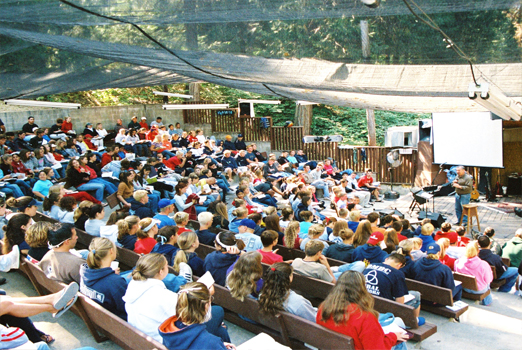
One more week of camp. So one more Encore Podcast.

My heart goes out to Mother Mary.

Her name means “Bitterness.” Sadly, and quite frankly, in many ways Mary lived up to her name.

Being the mother of Jesus was no small task. One that she fulfilled with great dignity. But boy did she face her challenges.

In this PODCAST, we will gaze upon a Scriptural snapshot of Mary unlike anything you have ever seen before. Not only that, but we will encounter Jesus in His darkest hour, second only to that night before the crucifixion when He sweat drops of blood in the Garden of Gethsemane.

As we do, our love for Him will deepen. Our respect for His mom will broaden. And our understanding of the both of them will stir up within our own hearts a sense of God’s presence in our lives like we’ve never experienced before.

Please remember that depending upon your web browser and connection speed, it may take up to 60 seconds for this podcast to begin to play.

May God richly bless you as you listen!

Categories: Uncategorized | Tags: , , , , , , , | Leave a comment

Money Matters

I’m off doing my camp speaking thing. (I sure would appreciate your prayers: for me, but especially for the campers who are stuck having to listen to me for the week. But I digress.)

Anyway, in this encore PODCAST, you will learn one singularly simple concept which, if you take it to heart, will change your life forever.

It is my sense that in contemporary Christian culture in America, we have lost sight of the elegant simplicity spoken of in the New Testament. And consequently, we have lost so much of God’s blessing in the process.

So here’s to simplicity, with the hope that your life overflows with God’s bountiful blessing as we together apply this principle to our lives.

Please note that depending upon your web browser and connection speed, it may take up to 60 seconds for this podcast to begin to play.

Please remember that depending upon your web browser and connection speed, it may take up to 60 seconds for this podcast to begin to play.

God bless you richly as you listen.

Categories: Uncategorized | Tags: , , , , , , | Leave a comment

When “THIS Mountain” Moves

To be perfectly honest with you, the passage here in Matthew 21 is coming — for me,at least — at just the right time. And perhaps for you as well.

Given the current political climate in our beloved country, and the increasing despair that I have felt as the presidential primary season has now concluded, I so desperately need to hear my own message, courtesy of Jesus.

Jesus assured His disciples,

“Whatever things you ask in prayer, believing, you will receive.”

As you will hear in this PODCAST, the irony of what Jesus said is so thick that you could cut it with the proverbial knife.

The irony being this: Jesus said those words to the disciples on the eve of His crucifixion in order to strengthen, to fortify their fragile faith. And frankly, to strengthen and to fortify ours.

Jesus knew that the events in their lives were about to spin seemingly out of control. The hopes they harbored in their hearts were about to be crushed into the ash heap of history. The Jesus movement in which they played a central role was about to careen into a wall and to explode into a thousand broken pieces.

The wave they had been riding had peaked on Sunday during the Triumphal Entry, and then again on Monday during the Cleansing of the Temple. But Jesus knew only too well on that Tuesday AM that by Thursday PM that same storm surge would dash them into the jagged rocks of reality.

So to bolster their soon-to-be faltering faith (and ours), Jesus made them (and us) this glorious promise:

“Whatever things you ask in prayer, believing, you will receive.”

The only problem with that promise? As many of us have come to experience during own crises of faith, It.Doesn’t.Always.Work.

If it did, none of our loved ones would ever die. (Who of us hasn’t prayed for God, in faith believing — to invoke Jesus’ formula — to heal someone near/dear to us, only to watch them whither away to nothing?)

Our kids would never disappoint us, if that promise worked. (What parent hasn’t prayed diligently for their children, in faith believing, Amen, only to stand by and watch helplessly and at times hopelessly as one or more of our kids go sideways?)

If that promise did indeed work, we would always get the jobs we want, have the perfect marriages for which we pray, have enough money at end of each month.

Fact is, myriads of books been written and purchased and read about that promise. Countless sermons been preached and listened to and heeded. All to affirm the fact that if we pray in faith believing and do not doubt, we will receive whatever things we ask. We CAN move mountains by our prayers, we are told. The mountain of sickness, the mountain of debt, the mountain of broken relationships, the mountain of wayward children.

Over the years, I’ve heard it all, read it all, a thousand times. To the point where I’m sick of hearing it. Because it just doesn’t work… Or does it?

Please remember that depending upon your web browser and connection speed, it may take up to 60 seconds for this podcast to begin to play.

God bless you richly as you listen.

Categories: Uncategorized | Tags: , , , , , , , , , , , , , , , , , , , , , , , , , , , , , , , | Leave a comment

THE House

Welcome to Monday of Jesus’ last week, His Passion week, the final few days leading up to His coming crucifixion.

As you will hear in this PODCAST, At the very beginning of Jesus’ ministry, way back in John 2 (Podcast #21), Jesus cleansed the Temple for the first time. Now here in Mark 11, at the very end of His ministry, Jesus cleansed the Temple for the second time.

A display of uncharacteristic anger, rare to be sure. But a shocking display of anger nonetheless. Quite out of character for a Jesus who described Himself, and who consistently showed Himself to be a Very.Gentle.Jesus.

As Jesus walked through the Temple courts that day, something set Him off.

Yes, He was understandably upset about the fleecing of the flock that was going on here. To be perfectly pointed about it, these religious leaders were making bank by selling God. Religion had become big business. By the time of Jesus, the Temple Industrial Complex was alive and well and oh-so-lucrative.

Sadly, they had discovered in that day what so many Christian leaders have discovered today: God sells. Jesus sells. Then and now, there is money to be made in Jesus’ name. A boatload of money.

That being said, there was something of even greater offense to Jesus going on there in the Temple courts. You might not see it at first blush. But trust me, it is there, front and center. As you will soon see.

I’ll give you a hint: God desperately longs to dwell among His people, literally. That is a thread that is woven throughout the pages of the Bible.

God desperately longs to dwell among His people, literally. All of His people, Jew and Gentile alike, “from every tribe and language and people and nation” (Revelation 5).

From the very first pages of the Bible (Genesis), through to the very last pages of the Bible (Revelation), God desperately longs to dwell among His people.

That theological thread that ties the entire Bible together runs right through this story here in Mark 11, as Jesus cleansed the Temple for the second time.

Please remember that depending upon your web browser and connection speed, it may take up to 60 seconds for this podcast to begin to play.

God bless you richly as you listen.

Categories: Uncategorized | Tags: , , , , , , , , , , , , , , , , , , , , | Leave a comment

Behold the Lamb

There is a beautiful and breathtaking symmetry to the life and ministry of Jesus.

Case in point, as you will hear in this PODCAST, here in John 12, the beloved disciple brings us full circle. You may not see that now. But trust me, you will by the time we conclude this discussion.

Let me give you one tantalizing little hint: This beautiful symmetry to which I refer has little to do with palm branches, but everything to do with lambs.

Now watch this: When John introduced us to Jesus for the very first time, this is what he wrote:

“The next day John (the baptizer) saw Jesus coming toward him and said, ‘Look, the Lamb of God, who takes away the sin of the world!’”

That’s in John 1.

Here in John 12, this is what we read:

“The next day, the news that Jesus was on the way to Jerusalem swept through the city.”

Now listen: In both cases, at the very beginning of Jesus’ ministry in John 1, and here at the very ending of Jesus’ ministry in John 12, it’s all about a lamb.

I know that as you read any or all of the accounts of Jesus’ Triumphal Entry into Jerusalem as recorded in all four of the Gospels, you may not see a lamb. But trust me, it’s there. Front and center, it’s there.

Just as it is in John 1, so it is here in John 12, Jesus is the lamb of God who takes away the sin of the world. Miss that, and you miss the whole point of Jesus’ Triumphal Entry, on this — the Sunday before Passover.

Which raises a most intriguing question: Why did Jesus choose to ride into Jerusalem on that Sunday? Jesus could have ridden into Jerusalem on Saturday (If He did, we would call it Palm Saturday!), or on Monday, or Tuesday, or Wednesday, or Thursday.

Why did Jesus choose to ride in on the Sunday before Passover? Answer that, and you get the whole picture.

Here’s a secondary question: Since Passover did not officially begin until that Thursday night (Remember Jesus sharing with the disciples their final Passover seder in Upper room on Thursday night?), why were so many pilgrims in Jerusalem so early on that Sunday?

Answer that, and you get the whole picture.

Which underscores this point: The Bible is God’s picture book, and Jesus’ Triumphal Entry is yet another three-dimensional, High Definition portrait of breathtaking significance. A panoramic masterpiece that, though we studied one portion of the Triumphal Entry last week (Daniel’s prophecy), this picture is far too important to ignore this week.

Please remember that depending upon your web browser and connection speed, it may take up to 60 seconds for this podcast to begin to play.

God bless you richly as you listen.

Categories: Uncategorized | Tags: , , , , , , , , , , , , , , , , , , , , , , , , , , , , | Leave a comment

“This Your Day”

You talk about a collision of conflicting emotions, welcome to Jesus’ Triumphal Entry into His beloved city of Jerusalem.

As you will hear in this PODCAST, all of this emotional turmoil will come to a climax as Jesus paused during His Triumphal Entry into Jerusalem, gazed longingly at breathtaking panorama, and then suddenly sang this song of lament:

“If you had known, even you, especially in This.Your.Day.”

This your day.

The obvious question: What was it about this day that caused Jesus to refer to it with such a pointed specificity?

This was, of course, the day on which Jesus chose to make His return to the Holy City, and thus to trigger all of tumultuous events of His turbulent last week. It was, as you may know, the final Sunday before Passover that year, what we call Palm Sunday. This because the people gathered in their thousands, and waved palm branches all along the route of Jesus’ ride on the back of a donkey into Jerusalem.

I cannot help but to think that the words of Psalm 137 echoed through Jesus’ mind and heart as He rode into the city:

“If I forget you, Jerusalem, may my right hand forget its skill. May my tongue cling to the roof of my mouth if I do not remember you, if I do not consider Jerusalem my highest joy.”

Jerusalem: Jesus’ beloved city indeed. Let there be no doubt that Jerusalem was, and is, and ever shall be Jesus’ highest joy. Which makes His weeping — His crying convulsively — over the Holy City on this her day all the more poignant, all the more powerfully emotional.

Now, I need you to focus on one important fact that overshadows this entire week: Jesus’ thoughts were focused like a laser beam on one particular book of the Hebrew Bible (our Old Testament): the prophetic book of Daniel. How do I know this? Because on the Tuesday of this final week, a mere 48 hours after this Palm Sunday, Jesus will give to His disciples His grand and glorious Olivet Discourse, recorded in Matthew 24 – 25, and rivaled in its beauty and majesty only by the Sermon on the Mount in Matthew 5 – 7.

That signature sermon was delivered on the Mount of the Beatitudes in Galilee. This final sermon or discourse was delivered on the Mount of Olives overlooking Jerusalem.

In that discourse, Jesus laid out for His disciples and for us the sweeping panorama of the End Times, and all that will lead up to His glorious return. The so-called Signs of Times.

We will, of course, break it down in all of its majestic splendor when we get to that Tuesday in the coming weeks.

What I need for you to note now is what Jesus said right in the middle of that discourse, the interpretive key both for that sermon and for this moment in His Triumphal Entry:

Matthew 24:15, “So when you see standing in the holy place ‘the abomination that causes desolation,’ spoken of through the prophet Daniel let the reader understand.”

Jesus’ unmistakable reference to Daniel 9:24-27.

Now listen carefully: The Triumphal Entry sets in motion the beginnings of the fulfillment of this great prophecy in Daniel 9, what many call “The Seventy Weeks of Daniel.”

Allow me to read to you the prophecy in full, and then we’ll talk about it.

Please remember that depending upon your web browser and connection speed, it may take up to 60 seconds for this podcast to begin to play.

God bless you richly as you listen.

Categories: Uncategorized | Tags: , , , , , , , , , , , , , | Leave a comment

The Worst of the Worst of the Worst

The Apostle John turned out to be quite the lyricist. One could almost sing some of his melodious verses. In fact, many of us have.

As you will hear in this PODCAST, John wasn’t a scholar, not by any stretch of imagination. Quite unlike the Apostle Paul, for example.

John engaged in virtually no complex doctrinal discussions involving the nuances of theology, the kinds of stuff in which Paul reveled.

John’s Greek is so simplistic that 1 John is invariably the first book every 1st-year Greek student translates.

John was a passionate soul, one who wrote far more emotionally than he did academically.

Consequently, John had the uncanny ability to relate to us all on such a visceral level that you get the sense that he understood exactly what it’s like to be us — fragile, fearful, human.

When their paths first crossed, Jesus met a rather unremarkable, uneducated fisherman from the provincial little town of Bethsaida. Yet, by the time Jesus got done with him, John became a prolific author (with one Gospel, three letters, and his magnum opus, the majestic book of Revelation to his literary credit).

John was the only one of the twelve who stayed with Jesus on that fateful day of the crucifixion. So devoted was he to Jesus, that with one of His last, dying breaths, Jesus committed the care of His dearly beloved mom, Mary, to John.

It was John who went from being known as a “Son of Thunder” for his uncontrollable temper, to the “Apostle whom Jesus loved,” as John so referred to himself because he could not get over that fact that Jesus saw in him someone who could be loved.

Among his other glistening credentials, John was for a time the pastor of little family of faith in Ephesus. John was arrested, charged with being a leader of a Christ-following community, sentenced, and subsequently banished to penal colony on island of Patmos.

Separated he now was — by the Aegean Sea — from the people he so loved, his modest little flock in Ephesus. Which explains why, when John was allowed to see the splendors of Heaven, the very first description he wrote was so curiously cryptic to us, but not to him. Just a fragment of a verse that spoke volumes to John: “There was no more sea” (Revelation 21:1).

Anyway, John was eventually released from Patmos. He then apparently became reunited with several people from his former congregation in Ephesus.

Much to John’s delight, many of his former flock had continued in his absence to follow Christ faithfully, and to raise their children to follow Christ. This brought John such enormous joy, as you can imagine, that he wrote this in 2 John:

“How happy I was to meet some of your children and to find them living according to the truth, just as the Father commanded.”

“To find them living according to the truth.” Nothing brings more joy to a parent’s heart than that.

Likewise, there is nothing that brings to a parent more grief and heartache than to watch his or her child reject the truth they so love, and the God whom they so cherish.

That same anguish of soul floods the heart of every spouse whose husband or wife rejects truth, the family’s faith, the one true God. Just as it does anyone who watches helplessly as a beloved friend, relative, whomever, reject the truth.

The gallons of tears shed. The many sleepless nights spent worrying, agonizing, questioning, praying.

Our unnerving lament, written in a minor key, that invariably results from the knowledge that the thing we hold most dear they ridicule with contemptuous disdain.

The ever-present, nagging thought that perhaps if I had only said more, or said less; tried harder, or didn’t try so hard; or hadn’t

succumbed to my own weaknesses and hypocrisies. Maybe then I could have successfully passed onto my children a godly heritage one generation to the next.

And then, of course, there are those self-righteous parents whose own children are thriving in the faith. And they never seem to let you forget that you failed where they succeeded, causing us yet all the more guilt, shame, heartache, and heartbreak.

Just ask the mother of Zacchaeus.

Please remember that depending upon your web browser and connection speed, it may take up to 60 seconds for this podcast to begin to play.

God bless you richly as you listen.

Categories: Uncategorized | Tags: , , , , , , , , , , , , , , , , , , , , , , , , | 1 Comment

Blog at WordPress.com.